If you’ve begun a GLP-1-supported weight loss journey, you may know this feeling well: delight at the number on the scale, followed by the quieter observation in the mirror that your face looks different. A little more tired. A little more hollow. Somehow, older.
You are not imagining it, and you are not alone. As significant weight loss becomes increasingly common, aesthetic doctors are seeing more patients who are delighted by the changes in their health, weight and metabolic wellbeing, yet surprised by what they see in their face.
Table of contents
-
- Why Can Your Face Look Older After Significant Weight Loss?
- The Facial Changes You May Not Immediately Notice
- Fat Is Not Just Volume — It Is Biology
- What Happens to the Skin’s Biologically Active Fat Layer During Weight Loss?
- GLP-1s, Menopause and the Face: Is There a Double Effect?
- Can You Protect Your Skin and Facial Tissues While Losing Weight?
- Starting a GLP-1 Journey? When Should You Start Thinking About Your Face?
- Facial Volume Loss Doesn’t Automatically Mean You Need More Volume
- Regenerate or Replace? A New Approach to Facial Rejuvenation After Weight Loss
- Should You Have Aesthetic Treatments While You Are Still Losing Weight?
- Treat Now, Treat Later — or Don’t Treat Yet?
- When Should You See an Aesthetic Doctor During GLP-1 Weight Loss?
- Frequently Asked Questions
It is tempting to describe this simply as “losing facial volume”. But that phrase does not tell the whole story. The biology of the face is considerably more complex. Significant weight loss can alter facial fat, skin quality, collagen, muscle and the relationship between the different structural layers of the face.
It is also important to separate the effects of the medication from the effects of significant weight loss itself. The face can change whenever substantial amounts of body fat are lost, regardless of how that weight loss is achieved.
The important question, therefore, is not simply how much volume has been lost. It is what has changed, where has it changed, how quickly it has changed, and what, if anything, should be done about it?
Why Can Your Face Look Older After Significant Weight Loss?
Think of your face as a finely balanced system: skin; collagen and elastin; superficial and deep fat compartments; connective tissue, ligaments; muscle; bone; and the proportions between them all.
Facial fat is not one uniform layer. It is organised into different compartments, each with its own anatomical position and function. When significant weight is lost, changes in these compartments can alter the contours and relationships between different areas of the face, making existing signs of aging more visible.
The loss is therefore rarely one hollow that can simply be chased with volume. It is rather a change in the relationship between several layers of the face.
Chronological ageing gradually decreases the volume of facial fat compartments and alters fat distribution, as well as skin quality and structural support over many years. Significant weight loss can accelerate these changes. When change happens quickly, the skin and supporting tissues have less time to adapt.
A GLP-1 patient does not necessarily have an “older” face. They may have a face whose underlying support and proportions have changed faster than the overlying tissues can accommodate.
The GLP-1 Facial Changes You May Not Immediately Notice
Patients often cannot identify one particular feature. Instead, they simply feel that their face looks unfamiliar.
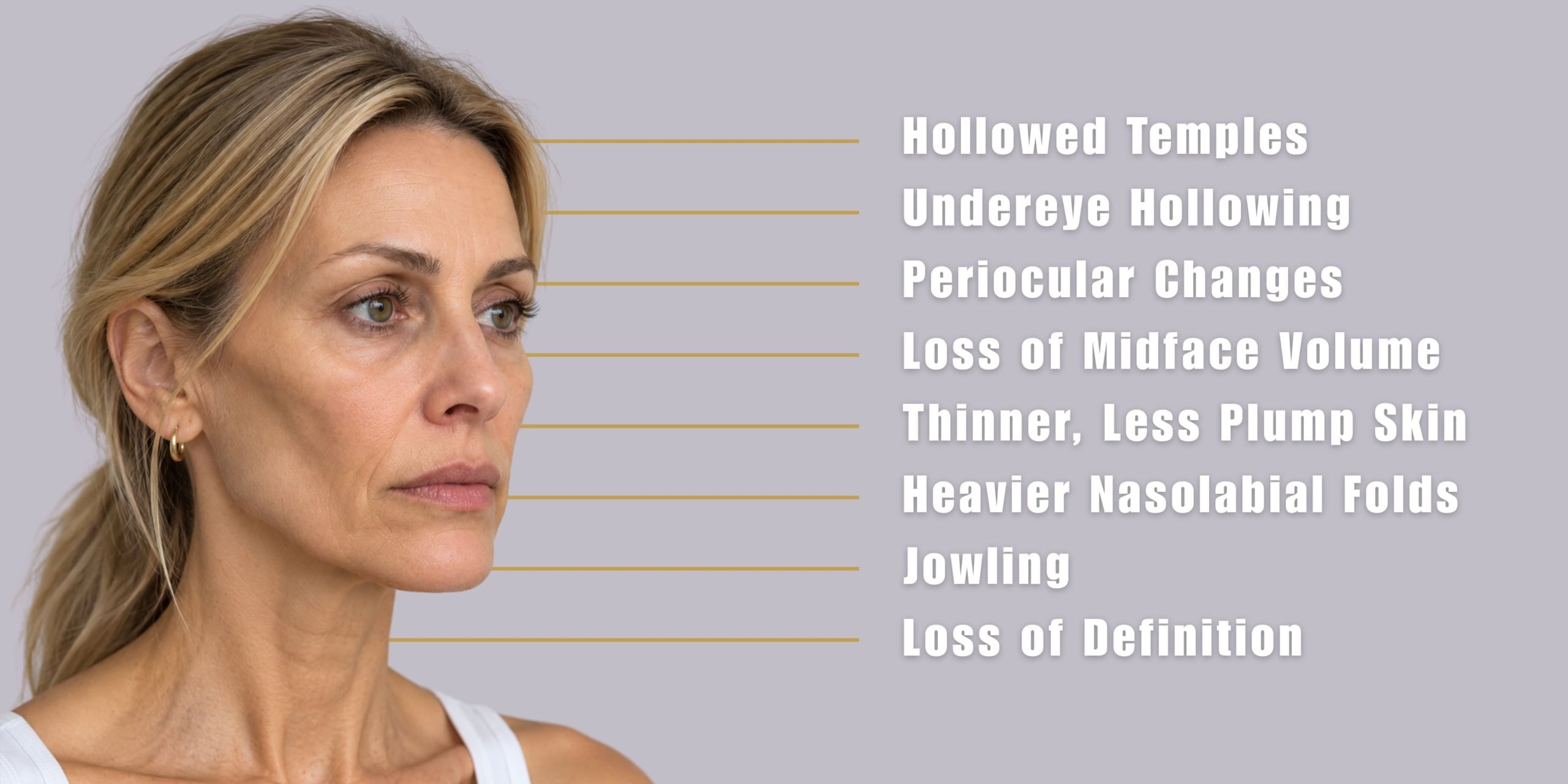
The temples may become hollower, subtly changing the silhouette of the upper face. Around the eyes, reduced volume can create a more tired appearance, and in the midface, changes in volume can make the transition between the lower eyelid and the cheek more visible.
Further down the face, reduced volume combined with skin laxity can affect definition and support around the mouth, jawline and lower face. Changes in subcutaneous tissue in the neck may also make skin laxity more apparent following substantial weight loss.
These changes are not uniform. Age, starting weight, the amount and rate of weight loss, genetics, skin quality, hormonal status and underlying facial anatomy all influence how an individual face responds.
There is no single “GLP-1 face”. There is simply an individual face responding to a significant physiological change.
Fat Is Not Just Volume – It Is Biology
One of the most important shifts in modern aesthetic medicine is our understanding that fat is not simply something that creates fullness. It is biologically active tissue.
Adipose tissue is living tissue. Alongside fat cells, it contains vascular, immune and stromal cells and produces signals that communicate with surrounding tissues.
In the face, these interactions form part of the biological environment in which the skin and underlying connective tissues function and repair themselves.
This is an important distinction when considering what happens after significant weight loss.
Replacing lost volume with an injectable material, like filler, and using a patient’s own fat are not biologically equivalent approaches. They are different tools, with different properties, indications, limitations and potential roles.
Autologous fat has attracted considerable interest within regenerative medicine because it contains more than mature fat cells. It also contains supporting cell populations and a complex network of biological signals that may contribute to tissue repair and remodelling.
This does not mean that fat grafting is automatically better than filler, or that every patient who loses facial volume should have fat restored. Rather, it reminds us that volume is only one part of the story.
The more important question is not simply, ‘How much volume have I lost?’ It is: ‘What has changed within my tissues, and what does my face actually need?
What Happens to the Skin’s Biologically Active Fat Layer During Weight Loss?
There is another layer of fat associated with the skin that is only beginning to receive the attention it deserves.
Known as dermal white adipose tissue, or dWAT, it is increasingly understood to be more than passive padding. Research suggests that it communicates with surrounding skin structures and participates in processes involving inflammation, wound healing, immune activity, extracellular-matrix regulation and tissue repair.
This raises an intriguing question: could significant weight loss affect this biologically active layer as well as the more visible facial fat compartments?
There is emerging research exploring how GLP-1 medications and associated weight loss influence adipose-derived regenerative cells and skin biology. While we understand increasingly more about the biological role of dermal and subcutaneous adipose tissue, we do not yet fully understand how GLP-1-supported weight loss specifically affects these compartments in the human face.
We can say that facial adipose tissue is biologically active, and that the relationship between fat, skin, collagen and the extracellular matrix is considerably more sophisticated than the traditional concept of ‘fat as filler’.
And that is why, when we think about the face after significant weight loss, replacing volume is only one part of the conversation.
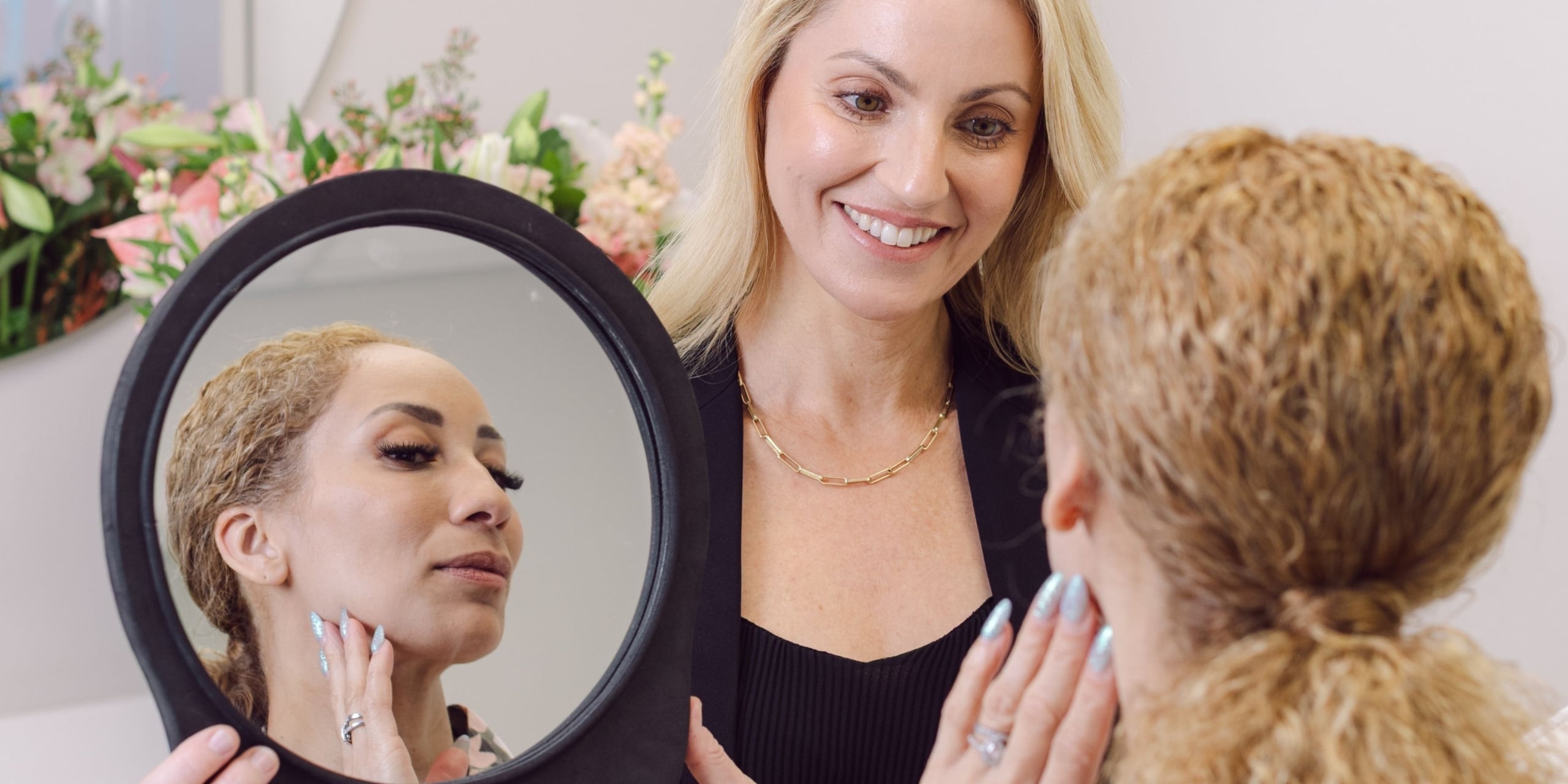
GLP-1s, Menopause and the Face: Is There a Double Effect?
For many women, significant weight loss does not happen in isolation. It may coincide with perimenopause or menopause.
These are two different biological processes, but their visible effects on the face can overlap.
As oestrogen declines during the menopausal transition, changes can occur in skin thickness, hydration, elasticity and collagen. At the same time, significant weight loss can reduce facial adipose tissue and alter facial proportions and support.
The result may be that a woman notices more pronounced changes than she might have experienced from either process alone.
It is important not to describe GLP-1 medication as directly causing menopausal skin ageing. Rather, two biological transitions may be occurring at the same time.
Recognising this is particularly important when assessing a woman’s skin and facial structure. The appropriate response may involve supporting skin quality, addressing hormonal factors through appropriate medical care, monitoring facial change and then considering whether aesthetic intervention is indicated.
Can You Protect Your Skin and Facial Tissues While Losing Weight?
Facial preservation begins long before an aesthetic treatment.
Medical treatments are only one part of the picture. How you nourish your body, maintain muscle and care for your skin can all support your tissues while your body is changing.
During significant weight loss, adequate protein is particularly important for preserving lean mass and supporting normal tissue repair and maintenance. Resistance training can also help maintain muscle and a healthy body composition.
Because GLP-1 medications can significantly reduce appetite, it is equally important to make sure that the food you are eating still provides the protein, vitamins, minerals and other nutrients your body needs.
The most helpful habits are refreshingly simple: good-quality protein at each meal, resistance training a few times a week, daily sun protection, and an evidence-based skincare routine. Avoiding smoking and moderating excessive alcohol also support long term skin health.
If your appetite has reduced considerably, it is worth speaking to your prescribing doctor or a dietitian about whether you are meeting your nutritional needs. The aim is not to prevent every change that comes with weight loss, but to keep your body functioning optimally and give your body and skin the best possible environment in which to adapt.
Starting a GLP-1 Journey? When Should You Start Thinking About Your Face?
Our honest answer: before you think you need treatment.
There is real value in a baseline assessment early in your journey, particularly when a significant amount of weight is expected to be lost.
An experienced aesthetic doctor can assess and document facial proportions, existing fat distribution, skin quality, laxity and areas already showing age-related change. Your weight-loss trajectory, previous aesthetic treatments and, where relevant, your menopausal or perimenopausal stage can also help provide important context.
The purpose is not to create a fixed treatment prescription. It is to establish a reference point and allow your plan to evolve with you.
Rather than reacting to changes once they have happened, your aesthetic doctor can monitor how the face is changing, distinguish between temporary and more lasting changes and help determine whether anything actually needs to be treated, and, importantly, when.
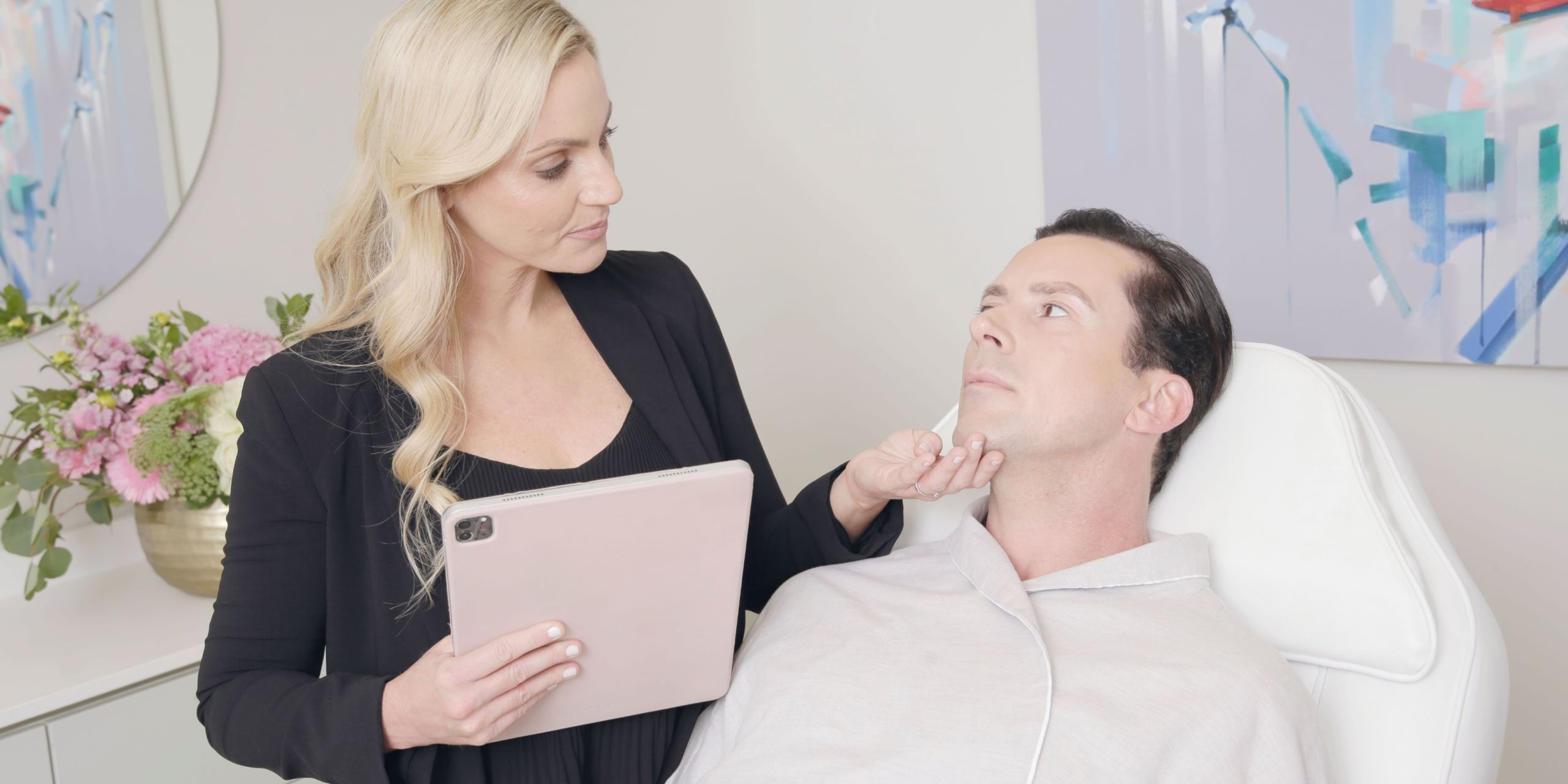
Facial Volume Loss Doesn’t Automatically Mean You Need More Volume
It is a natural instinct to think that if you’ve lost facial volume, surely the answer is to replace it? In practice, facial rejuvenation after significant weight loss is far more complex. A thorough assessment is aimed at determining whether the primary issue is volume loss, skin laxity, reduced collagen, altered proportions, changes in structural support or a combination of these.
Adding filler without understanding these factors can potentially result in unnecessary volume rather than restoring natural facial balance.
The goal should never be to replace every milliliter that has been lost. The goal is to understand what has changed and, where clinically appropriate, restore support, tissue quality and facial harmony.
Regenerate or Replace? A New Approach to Facial Rejuvenation After Weight Loss
Contemporary facial rejuvenation is increasingly moving away from the idea that one treatment should solve everything.
Depending on the individual, treatment may involve regenerative approaches to support tissue quality, biostimulatory treatments to encourage the skin’s own collagen production, energy-based treatments to address skin quality and laxity, selective volume restoration, autologous fat-based approaches, or, where there is substantial tissue laxity or structural change, discussing surgery.
The important principle is not the treatment itself. It is combination and sequencing. No single treatment is the answer for everyone. The art lies in understanding what the individual face needs and combining and sequencing the appropriate approaches at the right time.
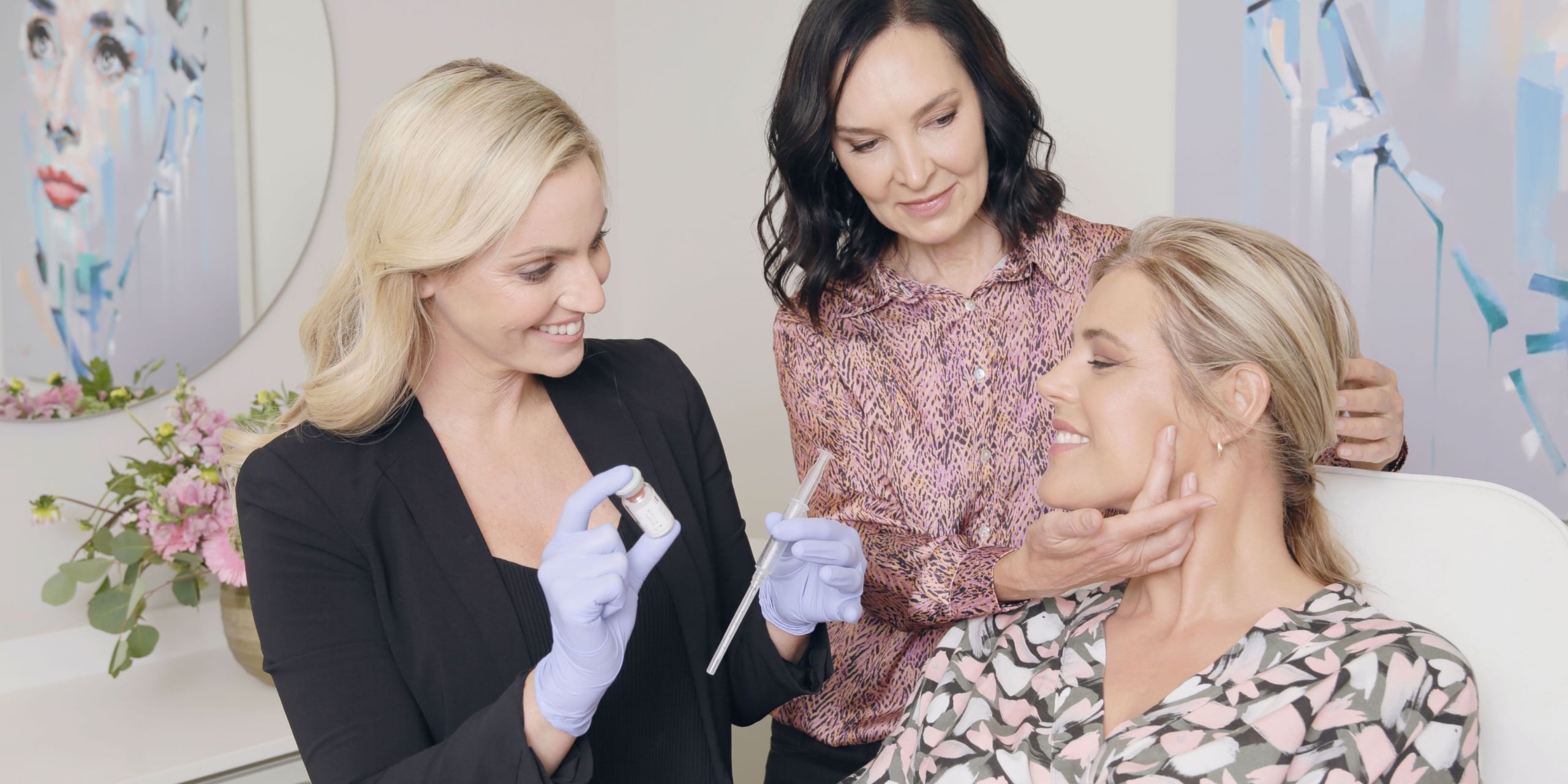
Should You Have Aesthetic Treatments While You Are Still Losing Weight?
You can, but the timing and type of treatment matter.
Active weight loss is an important part of treatment planning. Treatments supporting skin quality, hydration and collagen production are an important part of the journey.
However, treatments intended to correct final facial proportions or restore substantial volume may be more appropriately considered once your weight is approaching stability. Treating a face that is still changing can mean treating a moving target, and what is appropriate today may not be what your face needs several months from now.
The decision depends on where you are in your weight-loss journey, how quickly your weight is changing, your age, anatomy and skin quality, as well as what you are hoping to achieve from the treatment.
This is why an evolving plan is often more appropriate than a fixed prescription. Support what can be supported now, reassess what needs to change later, and avoid treating what does not yet need treatment.
Treat Now, Treat Later – or Don’t Treat Yet?
This is really the heart of how we think about care. A patient undergoing a major physiological transformation does not automatically need more intervention.
Sometimes the right answer is to treat now. Sometimes it is to support the tissues now and reassess later. And sometimes the most intelligent decision is simply to wait.
Intelligent Ageing™ is not about doing more. It is about knowing what to do, when to do it, and when not to.
When Should You See an Aesthetic Doctor During GLP-1 Weight Loss?
Consider an assessment if you are:
- beginning or planning substantial weight loss;
- noticing changes in facial proportions or skin quality;
- approaching your target or a stable weight;
- wondering whether facial volume loss means you need filler;
- interested in understanding preventative as well as corrective options.
The purpose of an assessment is not necessarily to recommend treatment. It is to understand your face. Because after significant weight loss, the most important question is not simply ‘What have I lost?’. It is ‘What has changed and what, if anything, should I do about it?’.
No two faces arrive at this moment in quite the same way, and no two should leave with the same plan. Your weight-loss journey is your own, shaped by your genetics, your history, your hormones and the pace at which your body has changed. And your face deserves to be understood with that same individuality.
This is the quiet discipline at the centre of Intelligent Ageing, taking the time to understand what your face is truly asking for.
The goal is never to simply put back everything you have lost. It is to understand what has changed, preserve what is healthy, and restore what genuinely needs restoring.
Frequently Asked Questions
Does GLP-1 weight loss make your face look older?
Significant weight loss can alter facial fat distribution, skin laxity and facial proportions, which may make existing signs of ageing more noticeable. This does not mean that GLP-1 medication itself inevitably ‘ages’ the face. The amount and speed of weight loss, together with age, genetics, skin quality and underlying facial anatomy, all influence how an individual face responds.
Does your face recover after GLP-1 weight loss?
This varies considerably. Some tissues can adapt over time, while other changes may persist. How much the face changes, and how much it settles afterwards, depends on factors including age, genetics, the amount and speed of weight loss, skin elasticity, nutritional status, and the underlying structure of the face. It is often worth allowing some time for the tissues to adapt before deciding what, if anything, needs to be treated.
Can you prevent facial volume loss while taking a GLP-1?
There is no reliable way to prevent facial fat loss during significant weight loss. However, there are ways to support the health and quality of the tissues while your face is changing. Adequate nutrition, sufficient protein, resistance training, daily sun protection and evidence-based skincare all have an important role. For some patients, collagen stimulating or biostimulatory treatments may also form part of a preventative or supportive plan, helping to support skin quality and collagen as the face changes. The aim is not to stop the face from changing, but to support its tissues throughout the journey and reassess what, if anything, needs to be treated as your weight approaches stability.
Should I get filler after GLP-1 weight loss?
Facial volume loss may be only one part of the change, and adding volume does not necessarily address skin laxity, reduced collagen or altered facial proportions. A specialist assessment should first establish whether the main concern is volume, skin quality, laxity, structural support or a combination. Where volume restoration is appropriate, it should be selective and guided by the overall balance of the face rather than an attempt to replace everything that has been lost.
Should I wait until my weight is stable before having aesthetic treatment?
Not necessarily. Some treatments focused on supporting skin quality, collagen production or tissue health may be considered during active weight loss. However, treatments intended to establish final facial proportions or restore significant volume may be better assessed once weight is approaching stability. The right timing depends on your rate of weight loss, anatomy, age, skin quality and what you want the treatment to achieve.
What treatments can help the face after significant weight loss?
There is no single treatment that is right for everyone. Depending on what has changed, options may include regenerative and biostimulatory treatments to support tissue quality and collagen production, energy-based treatments for skin quality or laxity, selective volume restoration, autologous fat-based approaches and, where appropriate, surgery. The important question is not which treatment is most popular, but which approach, or combination of approaches, is appropriate for your individual anatomy and where you are in your weight-loss journey.
Interested in your own personalised aesthetic plan? Email us at capetown@drnwilkinson.co.za to start your journey today.