
You’re 42. But is your skin 42?
We tend to think about ageing according to birthdays. But chronological age tells us only how long you have been alive, not necessarily how your skin has aged.
Put two people of the same age side by side and their skin can tell two very different stories.
One may have relatively little visible sun damage but struggle with dehydration and sensitivity. Another may have excellent hydration yet show more pigmentation, uneven texture or loss of elasticity. Their birthdays may be identical. Their skin biology and accumulated exposures may not be.
So perhaps the more useful question isn’t simply: “How old am I?”
It is: “How is my skin ageing?”
Skin ageing is a complex interaction between intrinsic biological processes and external influences, including genetics, ultraviolet radiation, hormones, smoking, pollution, stress, lifestyle and skincare habits. Let’s take a closer look at all the factors that influence your skin’s age.
Table of contents
-
- Chronological Age vs Biological Skin Age: What’s the Difference?
- Treating Skin According To “Age Brackets”
- Why Can Two People the Same Age Have Completely Different Skin?
- Your Skin Is A Mirror Of The Past
- What If We Could See What the Mirror Can’t?
- Are We Measuring Skin Ageing Wrong?
- Can You Change Your Skin’s Biological Age?
- Why Personalised Skincare Matters More Than Age
- What Actually Helps Skin Age Well?
- So, Is Your Skin Older Than You Are?
- Frequently Asked Questions About Skin Age
Chronological Age vs Biological Skin Age: What’s the Difference?
Chronological age is a number. Skin age is a story.
Your chronological age is simply the number of years you have been alive. It is objective, fixed and easy to measure.
Your skin, however, does not necessarily follow the same timeline.
When we talk about biological skin age, we are referring to the overall condition and characteristics of your skin in relation to what might typically be expected at your chronological age. It is a useful clinical concept, not a single, universally accepted number that can tell us exactly how “old” your skin is.
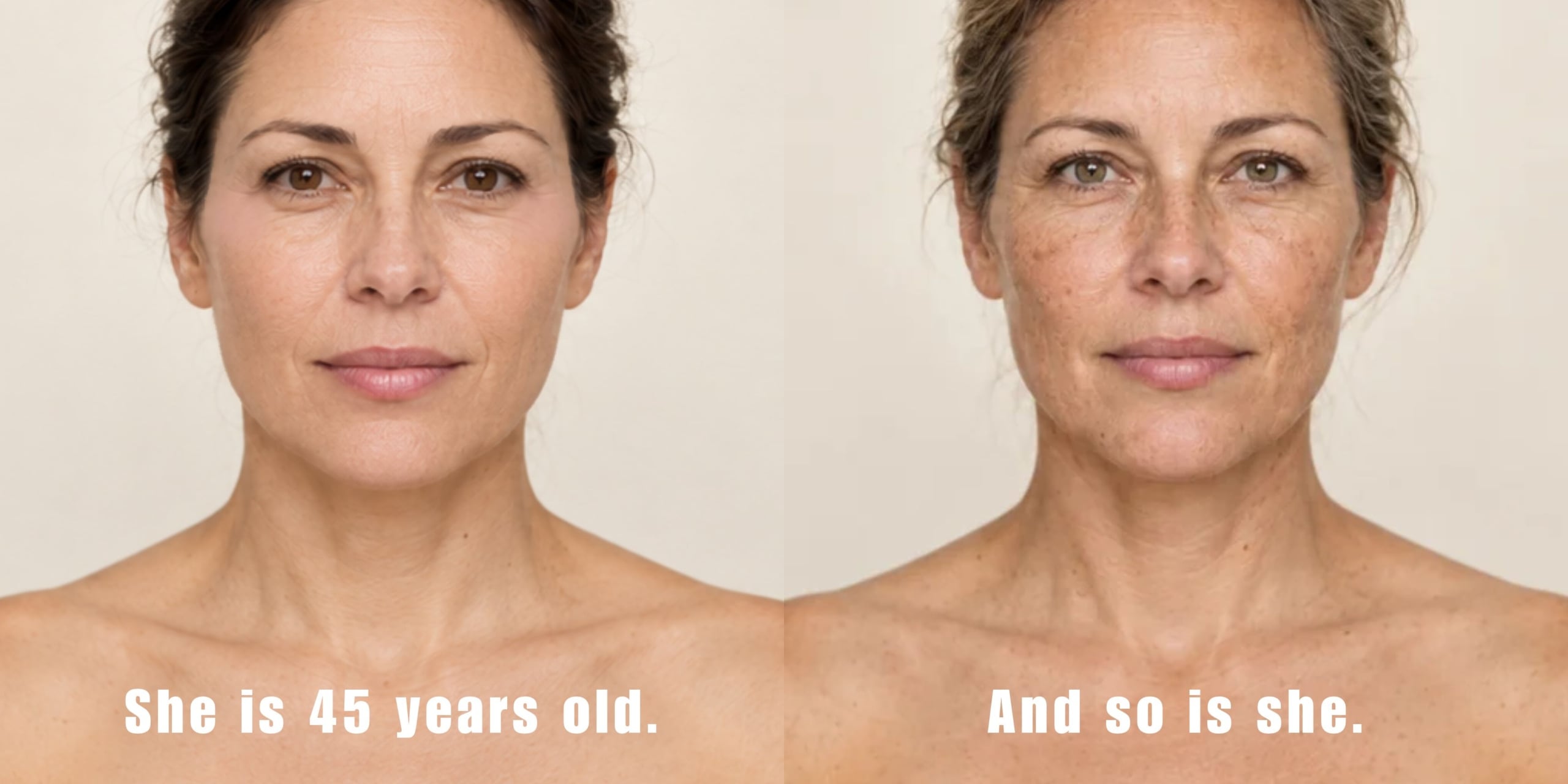
This distinction matters because skin ageing is not uniform. Collagen and elastin, cellular turnover, hydration, pigmentation, barrier function and the skin’s ability to repair itself can all change at different rates. Genetics, hormones, cumulative UV exposure, lifestyle and environmental factors can influence those changes. This means two people who are both 45 can have remarkably different skin.
Neither person’s skin is necessarily “better” or “worse”. Their skin has simply experienced a different combination of intrinsic ageing and extrinsic influences.
Treating Skin According To “Age Brackets”
Labels such as “skincare for women over 40” can be useful for general education, but they are limited when it comes to individual treatment decisions.A more intelligent approach begins with assessing the actual condition of the skin what is visible, what can be objectively measured, and which factors may be influencing its current behaviour.That is the difference between treating an age group and treating an individual.Your date of birth gives us context. Your skin gives us the information we need to personalise the strategy.

Why Can Two People the Same Age Have Completely Different Skin?
The answer lies partly in the difference between intrinsic ageing and extrinsic ageing.
Intrinsic skin ageing
Intrinsic ageing refers to changes associated with natural biological ageing and individual genetics. These can include changes in:
• Collagen and elastin
• Cellular turnover
• Sebum production
• Hydration
• Skin thickness
• Hormonal environment
• Tissue repair and regeneration
Extrinsic skin ageing
Extrinsic ageing describes environmental and lifestyle influences that can accelerate visible changes in the skin.
These include:
• UV exposure: One of the most significant contributors to premature visible skin ageing and photoageing.
• Smoking: Associated with changes in collagen, elastin and overall skin quality.
• Pollution: Can contribute to oxidative stress and environmental skin damage.
• Stress and sleep: Chronic stress and inadequate sleep may affect skin barrier function and repair.
• Nutrition and alcohol: Overall health and lifestyle can influence skin quality.
• Skincare habits: Appropriate skincare can support the skin barrier, while excessive or inappropriate use of active ingredients may cause irritation.
• Hormonal changes: Life-stage hormonal shifts can influence hydration, pigmentation, sebum production, collagen and elasticity.
This is not about assigning blame. You did not “cause” your skin to age. Your skin reflects an extraordinarily complex interaction between genetics, biology, environment and accumulated exposure.
Your Skin Is A Mirror Of The Past
Your skin today reflects much more than what happened this week.
Yes, your skin has a history… Think of it as having a cumulative record.
Years of sunlight, hormonal fluctuations, environmental exposure, inflammation, lifestyle and skincare choices can all contribute to its present condition. UV exposure is a major driver of skin ageing. And some of the changes happening within the skin may not be immediately obvious when you look in the mirror.
But what if we could see what the mirror can’t?
This is where objective skin analysis becomes particularly interesting.

What If We Could See What the Mirror Can’t?
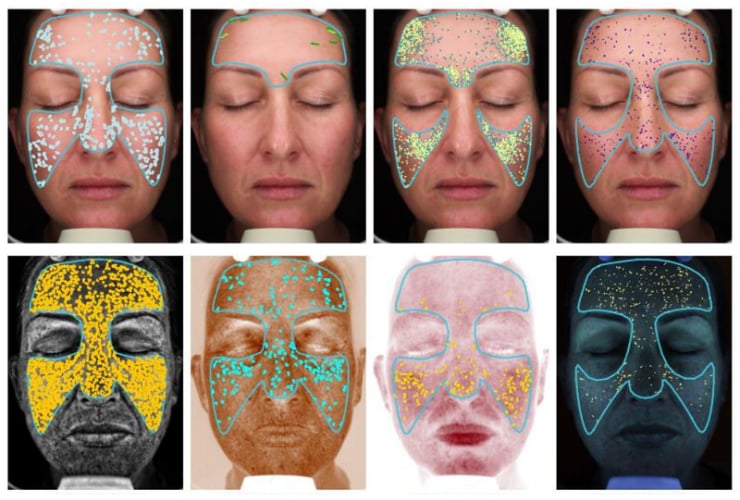
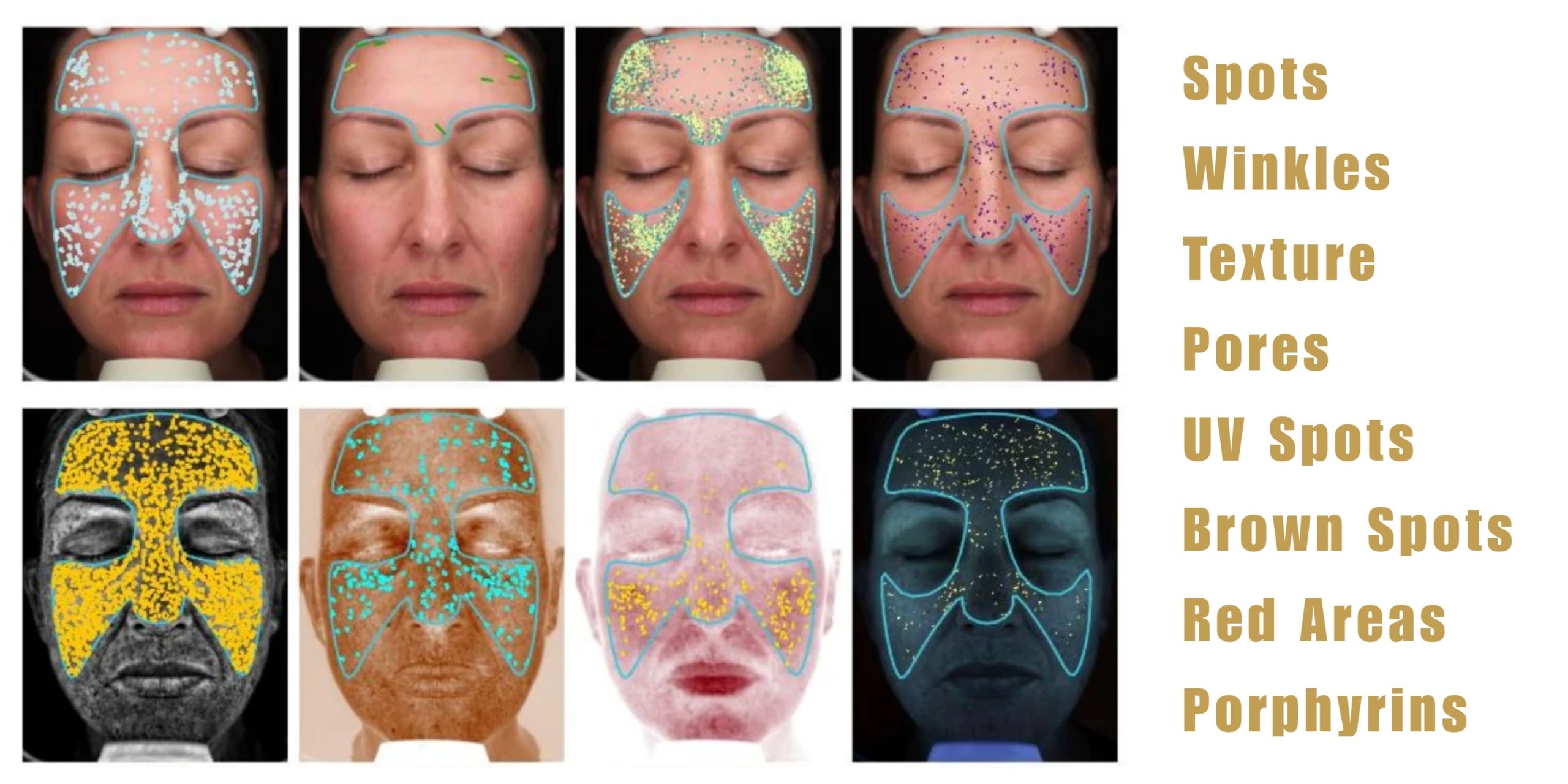
At Dr Nerina Wilkinson + Associates, VISIA Skin Analysis provides a more detailed assessment of the skin than visual examination alone.
VISIA uses high-resolution multispectral imaging, including standard, cross-polarised and UV photography, to analyse characteristics including spots, wrinkles, texture, pores, UV spots, brown spots, red areas and porphyrins. These imaging modes can reveal patterns that may not be obvious to the naked eye, particularly UV-related changes and pigmentation.
One of the most interesting features of VISIA is its TrueSkin Age® capability. It is important to understand what this does, and what it does not do.
TrueSkin Age should not be interpreted as a definitive measurement of your biological age, cellular age or overall health. It is a software-derived comparative skin-age metric, based on analysed facial characteristics and comparison with reference data. The precise proprietary algorithm behind a commercial skin-age score should therefore not be confused with a scientifically established “biological clock”.
Your passport may say 48. Your skin analysis may indicate that certain measurable characteristics compare favourably, or less favourably, with those typically seen in people around your chronological age.
And that can be useful.
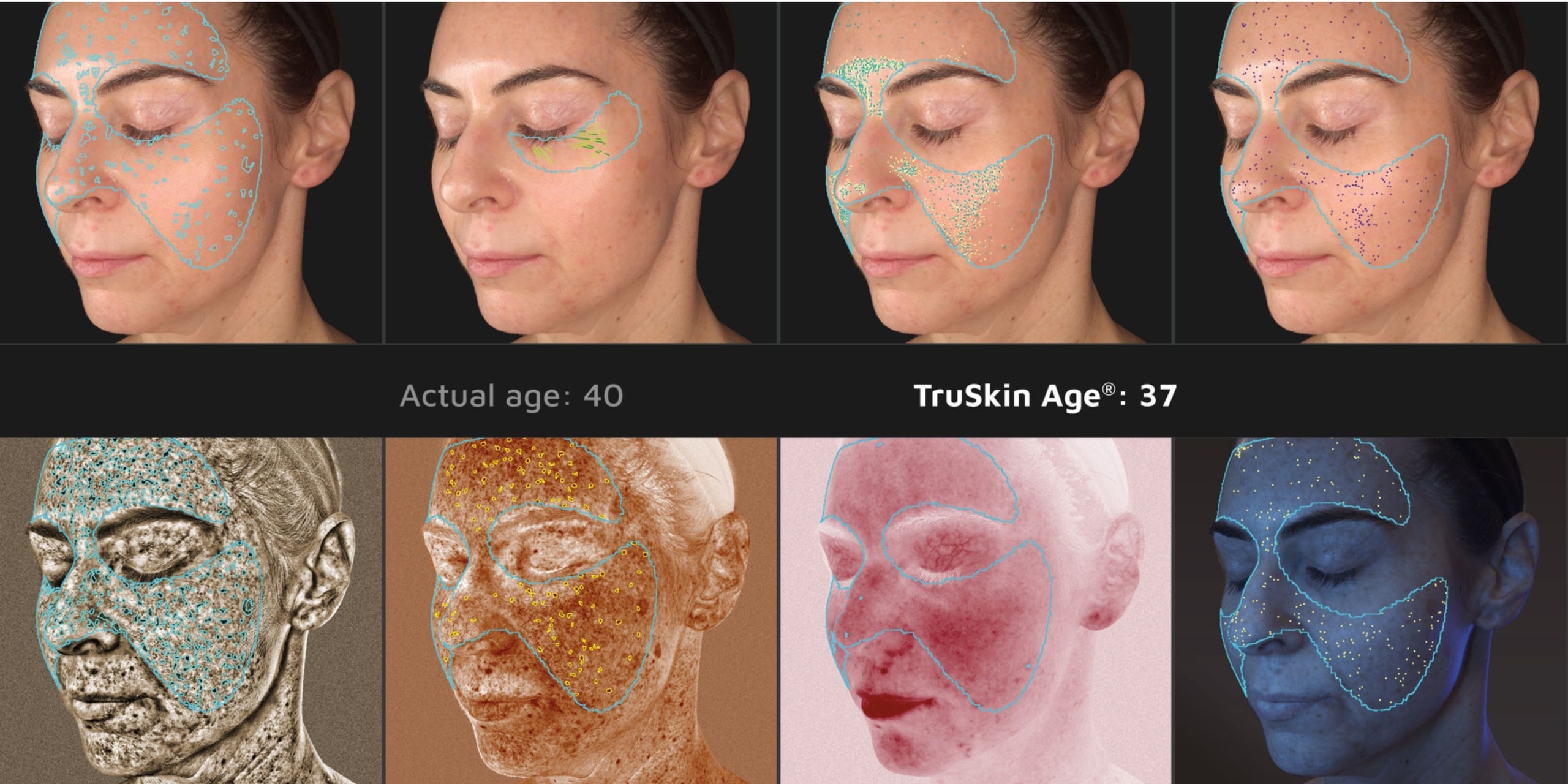
Image courtesy of Canfield Scientific Inc
The real value is not the “skin age number” itself. It is understanding which characteristics are contributing to the result and what may be addressed.
Technology supports professional assessment; it does not replace it.
Are We Measuring Skin Ageing Wrong?
For years, conversations around skin ageing have focused heavily on what we can see:
Wrinkles. Pigmentation. Fine lines. Sagging.
These remain important, but healthy skin ageing is considerably more complex. Modern skin science increasingly considers characteristics such as hydration, barrier integrity, elasticity, pigmentation, inflammation, extracellular-matrix changes and the skin’s ability to respond to environmental stress.
So, should the goal really be younger-looking skin? Or should it be skin that continues to function well as it ages?
At Dr Nerina Wilkinson + Associates, this is central to our philosophy of Intelligent Ageing™.
The objective isn’t to make a 50-year-old’s skin look 20 again. It is to support the healthiest, strongest and most functional version of their skin at 50, 60, 70 and beyond.
Can You Change Your Skin’s Biological Age?
You cannot change your chronological age, and we should be cautious about claiming that aesthetic treatments can literally “reverse time”.What we can influence are many of the characteristics associated with a skin that functions and appears more youthful. Depending on the individual, that may look like a personalised skincare plan which includes:
• Improving hydration and barrier function• Managing pigmentation
• Improving texture
• Supporting collagen and skin remodelling
• Reducing avoidable UV exposure
• Addressing inflammatory skin conditions
• Managing acne or rosacea
• Supporting overall skin quality
The emerging science of skin ageing increasingly supports the idea that some aspects of ageing are modifiable, while also highlighting how complex the underlying biology remains.
We cannot change your birth date. We can, however, influence how intelligently your skin is supported as it ages, and therefore, how healthy, radiantly and beautifully it represents YOU.

Why Personalised Skincare Matters More Than Age
The most considered approach to skincare begins with understanding your skin – its condition, your concerns and what you want to achieve. Your age provides context, but it should never be the sole basis for your treatment plan.
A 35-year-old and a 55-year-old may share remarkably similar skin concerns, while two 45-year-olds may need completely different approaches. A treatment that catches your attention on TikTok may therefore not be the most appropriate choice for your skin. One person may need pigmentation management and daily photoprotection. Another may benefit from a focus on hydration, barrier support and texture. For someone else, persistent redness or acne may take priority over visible signs of ageing.
Personalisation means looking beyond age to consider your skin’s current condition, sensitivity, treatment history and homecare, alongside your goals. It also means adapting your treatment plan as your skin’s needs change.
This is the thinking behind our 3D™ Bespoke Treatment: a customisable approach that allows our skincare specialists to select complementary modalities according to your individual skin requirements and clinical suitability.The treatment combines three targeted modalities. Depending on your assessment, these may include a carefully selected chemical peel, superficial microneedling with an individually selected active ingredient, and a specialised mask incorporating LED Light Therapy or Alginate Iontophoresis.
Each element is chosen for a reason, creating a treatment with a clear purpose for your skin.
Because your skin deserves more than an age category. It deserves a plan designed around you.

What Actually Helps Skin Age Well?
The most important principles are the consistent ones:• Daily photoprotection: Broad-spectrum sun protection and sensible UV avoidance remain fundamental to reducing preventable photoageing.
• Appropriate skincare: Choose products according to your skin’s condition and tolerance rather than trends.
• Professional assessment: Understand the skin before deciding what to treat.
• Consistency: Long-term skin health is rarely built through occasional intensive intervention alone.
• Lifestyle: Sleep, nutrition, smoking status, stress management and general health form part of the bigger picture.
• Strategic treatment: Procedures should have a clear indication and be selected according to the individual.
• Regular reassessment: Skin changes. Hormones change. Lifestyle changes. Your treatment plan should evolve too.
So, Is Your Skin Older Than You Are?
Perhaps. It may also be functioning remarkably well for its chronological age. Different characteristics of the same person’s skin may tell completely different stories. That is precisely why age alone isn’t enough information to build an intelligent skin strategy.
The future of skin health is moving away from simply asking: “How do I look younger?”
Towards a much more useful question: “How can I help my skin age well?”
That is the conversation worth having.

Frequently Asked Questions About Skin Age
What is biological skin age?
Biological skin age is a useful concept for describing how the condition and measurable characteristics of someone’s skin compare with what might typically be expected for their chronological age. It is not one universally accepted clinical number.
Can VISIA tell me my biological age?
No. VISIA provides objective imaging and comparative skin measurements. If the system provides a TrueSkin Age® result, this should be understood as a software-derived comparative skin-age metric rather than a definitive measurement of cellular or biological age.
What does VISIA Skin Analysis measure?
VISIA can assess characteristics including spots, wrinkles, texture, pores, UV spots, brown spots, red areas and porphyrins using different imaging modes.
Can I make my skin “younger”?
You cannot reverse chronological age. However, many aspects of skin conditions, including hydration, pigmentation, texture and signs of photoageing, can potentially be improved or managed with appropriate skincare, photoprotection and indicated treatments.
Is skin ageing caused mainly by genetics?
No. Genetics are important, but skin ageing reflects both intrinsic biology and extrinsic influences. UV exposure, smoking, pollution, lifestyle and other environmental factors can contribute significantly to visible skin ageing.
Do I need professional skin analysis if I already know my skin type?
Knowing your skin type is useful, but it does not tell the whole story. Objective imaging can provide additional information about pigmentation, UV-related changes, texture and other characteristics that may not be obvious in the mirror.
Does a lower skin-age score mean healthier skin?
Not necessarily. A single score should never be interpreted in isolation. It is still a comparison tool, and the knowledge of a skin specialist is integral for accurate and objective interpretation.
Curious About What Your Skin Is Telling Us?
A professional Skin Consultation and VISIA Skin Analysis can help us look beyond chronological age and better understand measurable characteristics such as pigmentation, texture, UV-related changes and overall skin condition. From there, our Skincare Specialists can develop a personalised strategy based not simply on your age, but on the skin in front of us.
Interested in your own personalised skincare plan? Email us at skinclinic@drnwilkinson.co.za to start your journey today.