
Written by Plastic Surgeon, Dr. Nerina Wilkinson
There is a particular kind of moment that often brings a woman to an aesthetic consultation. She may catch her reflection in unfamiliar light, see herself in a photograph or notice her face on a video call and think, ‘Something has changed.’ Perhaps there is a deeper line beside the mouth, a crease beneath the eye or a stronger fold between the brows. Because wrinkles are visible and easy to name, we often assume that they are what make us look older.
Table of contents
-
- Why Wrinkles Became the Villains of Ageing
- The Difference Between Dynamic and Static Wrinkles
- The Cause May Lie Beneath the Wrinkle
- How Facial Volume Affects Light and Shadows
- Deflation Is Not the Same as Descent
- Why Treating Wrinkles Alone Can Fail
- The Problem With the Wrinkle-Free Ideal
- Skin Health Is About More Than Treating Wrinkles
- Looking Beyond the Wrinkle into Intelligent Ageing
- Frequently Asked Questions
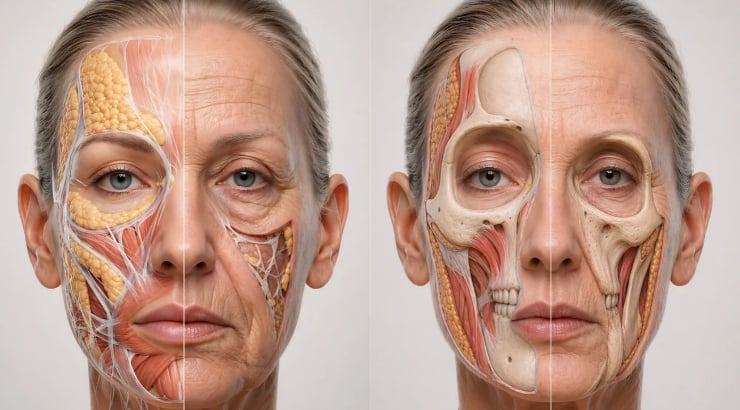
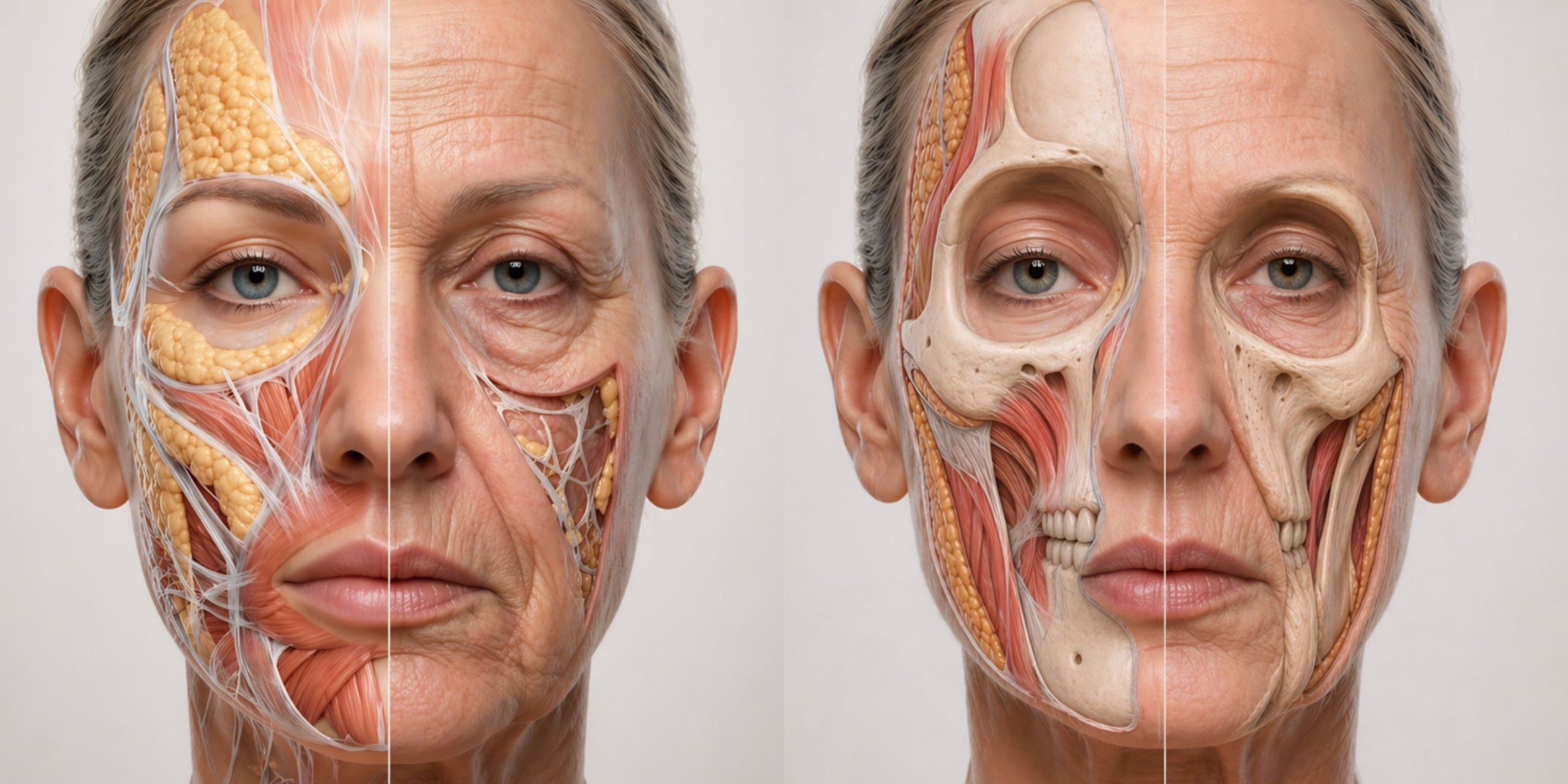
But wrinkles do not cause facial ageing. They are one visible part of a three-dimensional process involving the skin, facial fat, muscles, ligaments and bone. This is why one woman may have very few wrinkles yet look tired, while another may have expressive lines and still appear vibrant, elegant and full of life.
Understanding the science behind facial ageing allows us to move away from chasing individual lines and towards a more intelligent goal: preserving harmony, supporting tissue health and treating only what genuinely needs attention.
Why Wrinkles Became the Villains of Ageing
Wrinkles are easy to photograph, compare and market. A smoother forehead or softer eye line creates an obvious before-and-after result, and over time this has encouraged the idea that younger-looking skin must be completely line-free. Yet youthfulness is not simply smoothness.
When we look at a face, we notice far more than wrinkles. We read the shape of the cheeks, the position of the brow, the definition of the jawline, the quality of the skin and the shadows around the eyes and mouth. We also read movement. A smile that reaches the eyes feels warm and engaging, while a slightly raised brow may express curiosity or concern. Fine lines can be part of this emotional language rather than flaws that must always be erased.
A perfectly smooth face can still look heavy or unfamiliar, while a face with fine lines can remain luminous, balanced and full of vitality. Natural results therefore begin with understanding the face as a whole, not automatically treating its most visible crease.
The Difference Between Dynamic and Static Wrinkles
Not all wrinkles are the same. Dynamic wrinkles appear when the face moves, and we see them when we smile, laugh, squint, frown or raise our eyebrows. They include crow’s feet, forehead lines and frown lines, and they form part of normal human communication. Treatment can soften excessive movement where appropriate, but the aim should not be to erase expression. A face that can no longer move naturally may appear smoother, yet not necessarily younger.
Static wrinkles remain visible when the face is at rest. They develop as repeated movement interacts with reduced collagen, altered elastin, lower hydration, thinning skin, hormonal change and cumulative sun exposure. A dynamic line may gradually become static as the skin loses some of its ability to recover after movement.
Even then, the wrinkle is seldom only a surface problem. The tissues beneath it may also have changed, which is why treating the line alone may not create the improvement the patient is hoping to see.
The Cause May Lie Beneath the Wrinkle
In a previous blog, we described the face as a house. The skin is the visible roof, facial fat, muscles and ligaments form the walls and framework, and the facial skeleton creates the foundation. A visible crack in the roof may be influenced by something happening deeper within the house. Repainting it may improve the surface, but it may not correct the structural change beneath it.
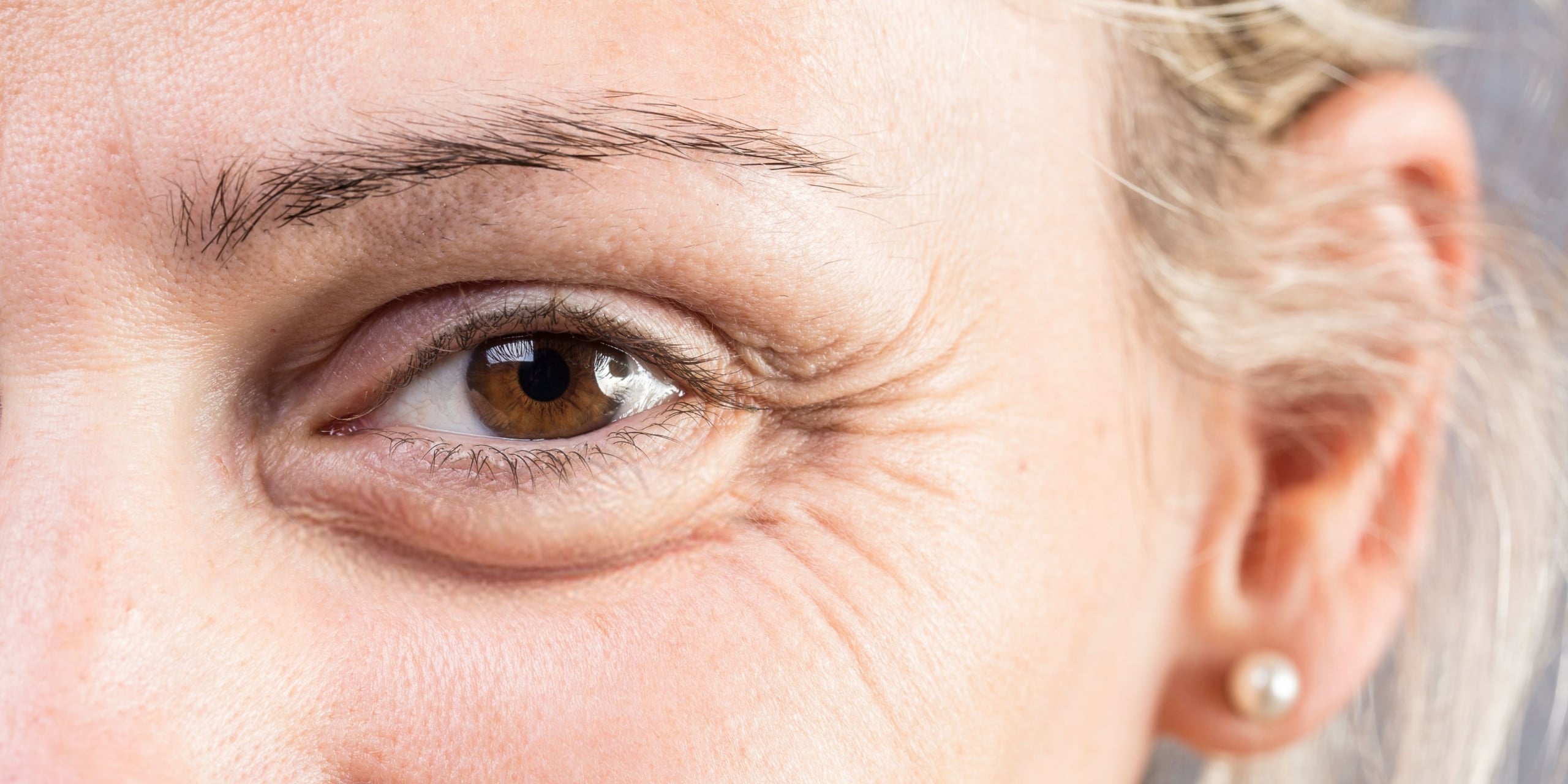
The same principle applies to facial lines and folds. A fold beside the mouth may become more visible because of changes in the cheek above it. An under-eye crease may involve thin skin, muscle movement, volume loss, ligament anatomy, skeletal support, pigmentation or shadowing. Forehead lines may reflect repeated movement, but the forehead may also be working harder because the brows or upper eyelids have become heavier.
A wrinkle, fold or hollow is therefore an observation, not yet a diagnosis. A thoughtful consultation begins by asking what created the line and whether treating it directly will improve the face as a whole.
How Facial Volume Affects Light and Shadows
Much of what we perceive as facial ageing is not a wrinkle at all. It is a change in light. A youthful face usually has soft transitions between neighbouring areas: the lower eyelid flows gently into the cheek, the temple blends into the forehead and cheekbone, and the midface supports the tissues below it.
As volume and support change, these transitions become more abrupt. A hollow creates shadow, while an adjacent prominence catches the light, making the face appear more tired or divided. Facial fat is arranged in separate compartments at different depths, and these compartments do not all age in the same way. Some genuinely lose volume, while others change position or appear heavier as nearby areas become depleted.
This is why volume loss cannot be corrected by simply adding fullness everywhere. The aim is to understand where light has been lost because of deflation, where shadow has deepened because of descent and where the skin itself is no longer reflecting light as evenly as it once did.

Deflation Is Not the Same as Descent
One of the most important distinctions in natural facial rejuvenation is the difference between deflation and descent. Deflation means that volume has been lost; descent means that tissue has shifted downwards from its earlier position. Many faces show both, but they do not require the same treatment.
A genuinely deflated temple or cheek may benefit from carefully selected filler or fat transfer.
Significantly descended tissue cannot reliably be returned to its earlier position by adding more volume. When descent is repeatedly treated as though it were emptiness, the face may become fuller and heavier without looking more youthful.
This is why volume cannot replace repositioning. In the appropriate patient, a surgical procedure such as BELLA Lift™ may be more anatomically honest than years of adding volume in an attempt to disguise descent. The aim is not to recommend surgery prematurely, but to recognise when the face needs support rather than more fullness.
Why Treating Wrinkles Alone Can Fail
Treating a wrinkle is not inherently wrong. Neuromodulators, Erbium laser resurfacing, carefully placed filler and collagen-stimulating treatments can each be valuable when they are used for the correct indication. The difficulty begins when the treatment is chosen before the cause has been understood.
Relaxing a muscle does not replace lost volume. Adding filler does not repair sun-damaged skin.
Resurfacing does not reposition descended tissue, and collagen stimulation cannot recreate lost skeletal support. When the wrong treatment is repeatedly applied to the wrong layer, a patient may receive more treatment without ever feeling that the real concern has been addressed.
Understanding more should allow us to do less, more precisely. Sometimes a line should be softened. Sometimes improving the surrounding skin or restoring support elsewhere creates the more beautiful result. Sometimes the wrinkle should simply be left alone.
The Problem With the Wrinkle-Free Ideal
Ageing is not an aesthetic emergency. As a female plastic surgeon, I believe it is especially important that women are not taught to see every line as a failure, a sign of neglect or evidence that they have not cared for themselves. A line beside the eye may reflect years of smiling, while natural texture, asymmetry and movement are part of being human.
This is also where perception drift becomes important. When we repeatedly view filtered, edited and overtreated faces, they can begin to appear normal. Natural movement, asymmetry and skin texture may then be interpreted as imperfections. Doctors and practitioners are not immune to this shift, and ethical aesthetic medicine requires us to keep returning to the unedited human face.
Your blueprint is not a filter, a celebrity image or someone else’s result. Your blueprint is your anatomy, your biology and your story.
Skin Health Is About More Than Treating Wrinkles
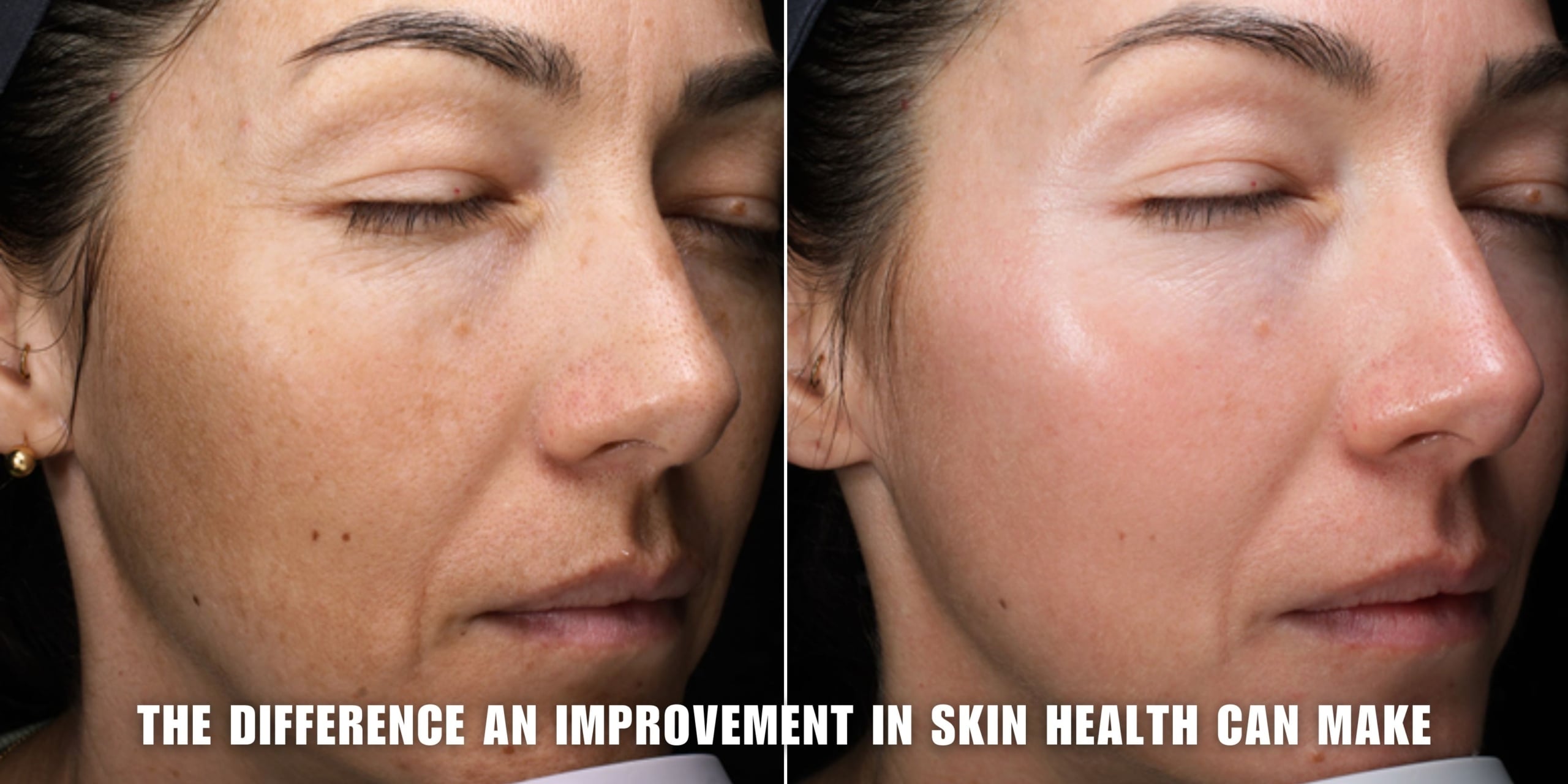
Wrinkles are only one measure of skin quality. Healthy skin also depends on hydration, luminosity, even pigmentation, elasticity, firmness, barrier health and the ability to repair. A woman may have few wrinkles yet feel that her skin looks tired because it has become dry, dull or uneven.
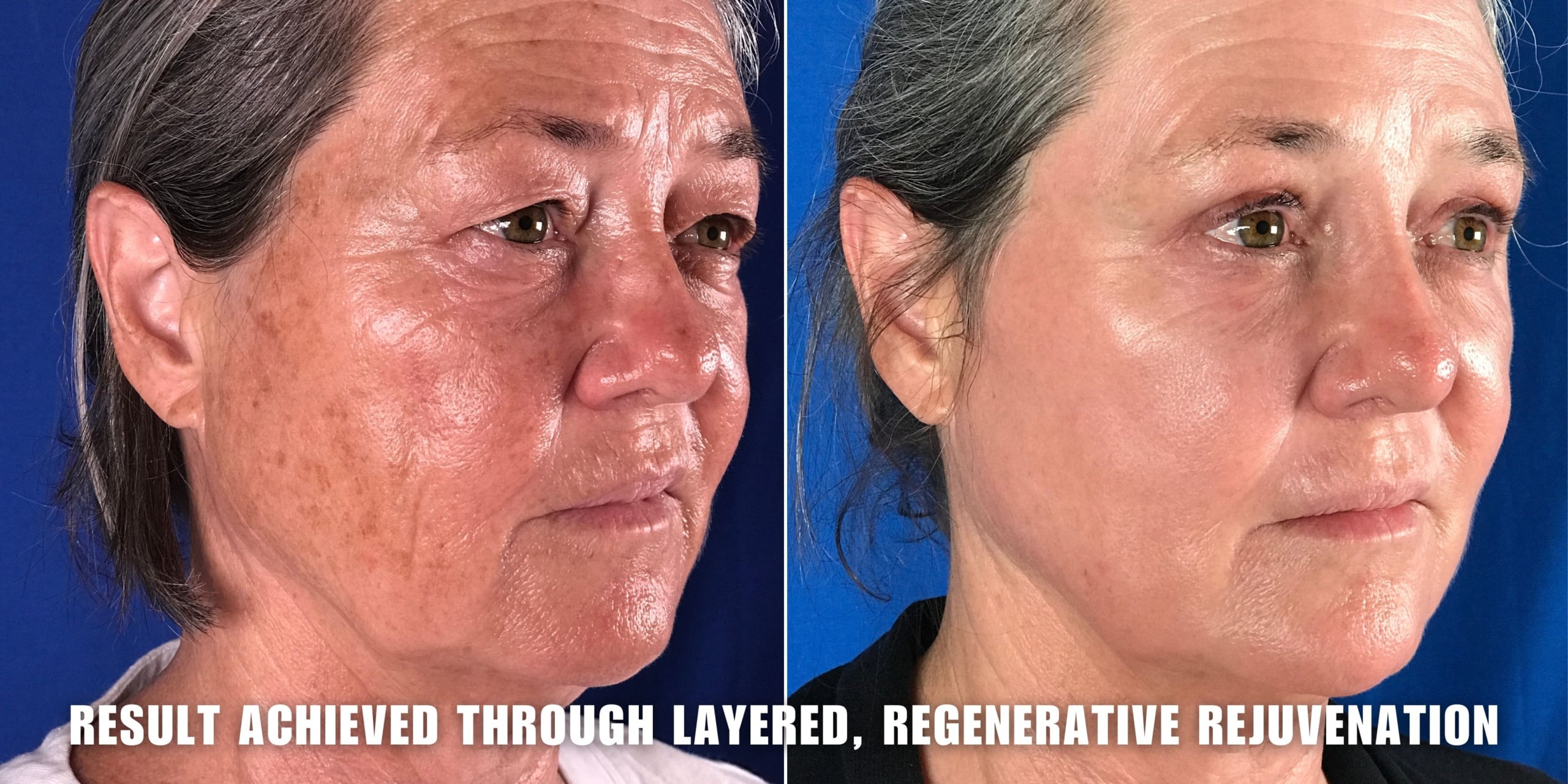
Collagen matters, but elastin, blood supply, cellular communication and barrier function also influence how skin behaves and reflects light. Effective skin rejuvenation therefore often focuses on overall tissue quality rather than simply ironing out one line. Daily sun protection, evidence-based skincare, treatment of pigmentation and inflammation, medical microneedling, fractional laser, radiofrequency microneedling and selected regenerative or biostimulatory treatments may all have a role.
The correct choice depends on the skin, the patient and the concern. A treatment does not become more appropriate simply because it is newer or described as regenerative.
Looking Beyond the Wrinkle into Intelligent Ageing™
Our signature treatment philosophies were developed around this layered approach. EYELight360® considers the eye as a complete aesthetic unit, because tired-looking eyes may involve the eyelids, surrounding skin, volume, muscle activity, skeletal support and the relationship between the brow, eyelid and cheek. The concern is not always simply crow’s feet.
StemCell4DLift™ considers structure, surface, movement and biology, while BELLA Lift™ addresses structural descent when lifting and repositioning are more appropriate than continuing to add volume. Treatments such as ErbiGlow, Morpheus8, PRP, polynucleotides, medical skincare and carefully selected injectables each have their place. The signature lies not in giving every patient the same procedure, but in applying the same thoughtful principles.
Intelligent Ageing prioritises skin health over flawless skin, harmony over perfect symmetry, movement over frozen expression, identity over imitation and science over trends. The most beautiful faces are not necessarily those with the fewest wrinkles. They are faces that remain alive with character, warmth, confidence and expression. Wrinkles do not cause ageing; they are one of the ways in which a changing face tells its story.
Frequently Asked Questions
Why do I look older even though I do not have many wrinkles?
A tired or older appearance may be caused by under-eye shadowing, facial volume loss, changes in tissue position, skin quality or altered facial proportions. Wrinkles are only one part of facial ageing.
Can wrinkles be prevented completely?
No. Facial movement is normal and essential for expression. Sun protection, evidence-based skincare, avoiding smoking and carefully selected treatments may reduce premature skin ageing and help preserve skin quality.
Does botulinum toxin stop facial ageing?
Botulinum toxin can soften selected dynamic wrinkles by reducing muscle activity. It does not treat skin damage, facial volume loss, skeletal change or significant tissue descent.
Should every facial fold be treated with filler?
No. A fold may be influenced by volume loss, tissue descent, muscle activity, ligament anatomy and skin ageing. Adding filler is not appropriate for every fold and may create heaviness when the primary problem is descent.
What creates the most natural facial rejuvenation result?
Natural results come from accurate diagnosis, conservative treatment, correct sequencing and respect for facial identity. The aim is not to remove every sign of age, but to restore harmony while preserving movement and individuality.
Interested in your own Intelligent Ageing plan? Email us at capetown@drnwilkinson.co.za to start your journey today.