By Dr. Nerina Wilkinson
Cosmetic Surgeon | MBChB (Stell) M.MedFC PLAST (SA)
In my consulting room, I often hear: “Doctor, I’m not trying to look younger… I just want to look like myself again.”
That is exactly the right goal. But to achieve it, we need to be clear about what is truly changing as the face ages. It is rarely “just wrinkles.” Wrinkles are simply what you notice first. The deeper story is usually about two processes that often get confused: facial sagging vs volume loss.
Some faces age by dropping. Some faces age by deflating. Most do a bit of both. And this is why treatment decisions can feel confusing — because the right solution depends on which process is driving what you are seeing.
Facial ageing is more than skin deep
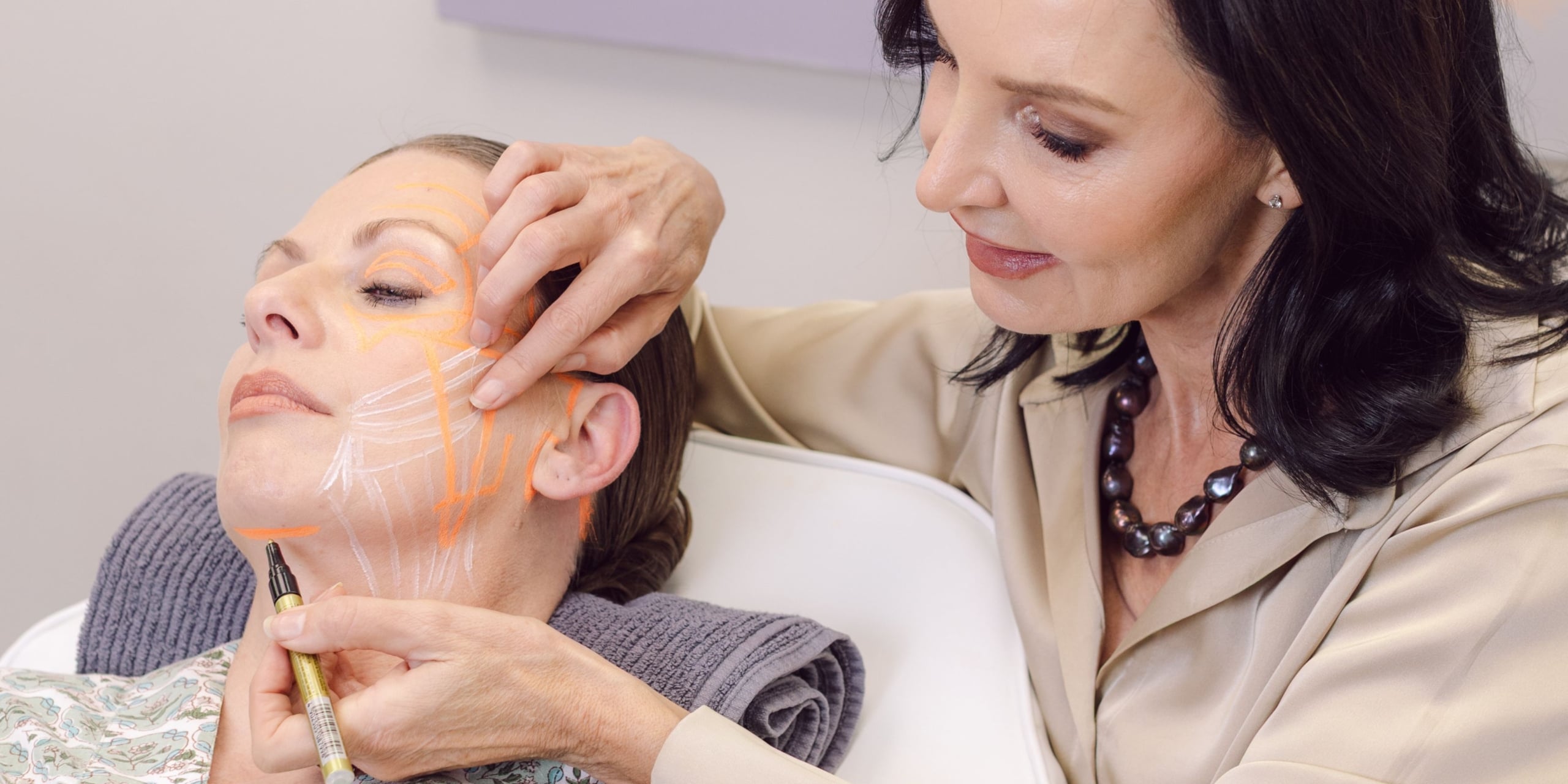
I explain facial ageing to patients as a layered change, almost like a beautifully tailored garment that slowly loses its structure over time. The fabric may thin (your skin), the padding may reduce (your fat compartments), and the internal stitching that holds everything in position may loosen (your deeper support and ligaments). When those changes happen together, the face can look simultaneously tired and heavy — and that’s why the “one treatment fixes all” approach often disappoints.
Importantly, prejuvenation focuses on preserving skin health and stimulating collagen early, rather than correcting deep-set wrinkles later.
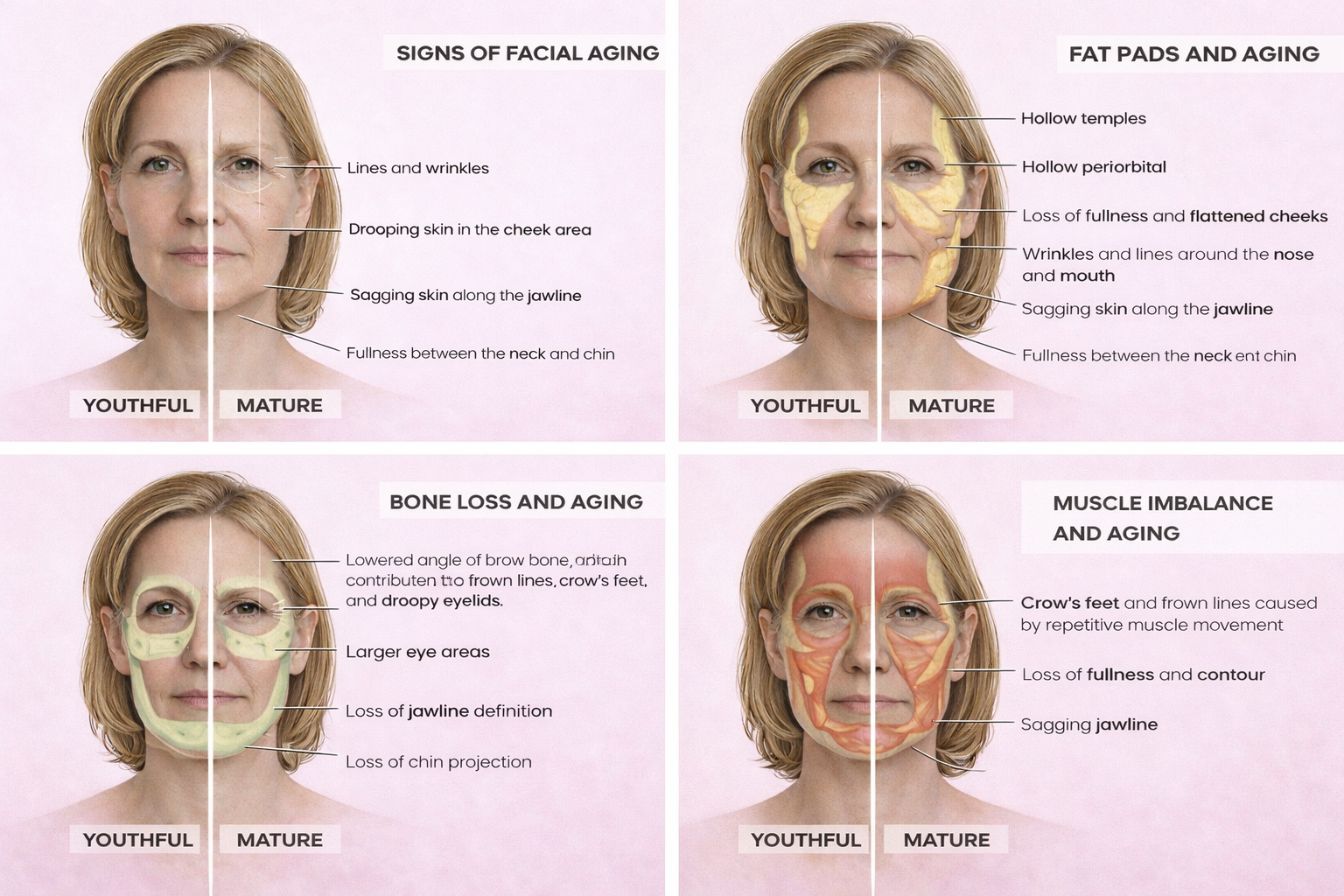
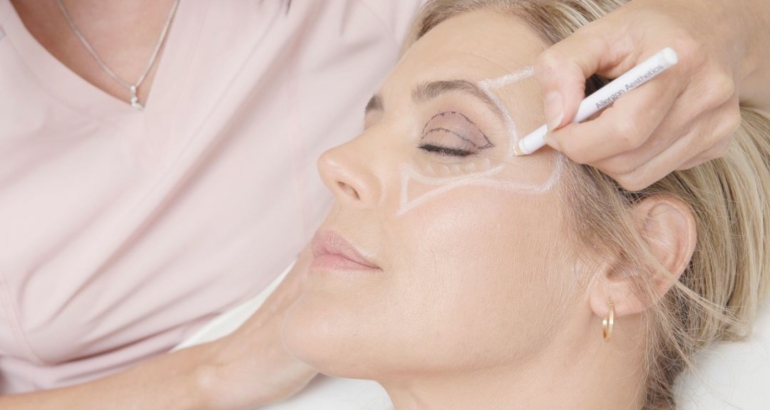
Images created by AI for educational purposes.
What is facial sagging?
Facial sagging is a support and positioning problem. Over time, the ligaments and deeper layers that hold facial tissue in place gradually loosen. Gravity then encourages the tissue to settle lower. The tissue has not disappeared — it has moved.
This is when patients start noticing jowls, a softer jawline, heaviness in the lower face, and sometimes neck laxity. The face can look as if it is being pulled downward, even if the skin quality is still good.
Sagging matters because it is not reliably corrected by adding volume. In fact, trying to “fill” a face that primarily needs lifting can create a heavier, less defined lower face over time.
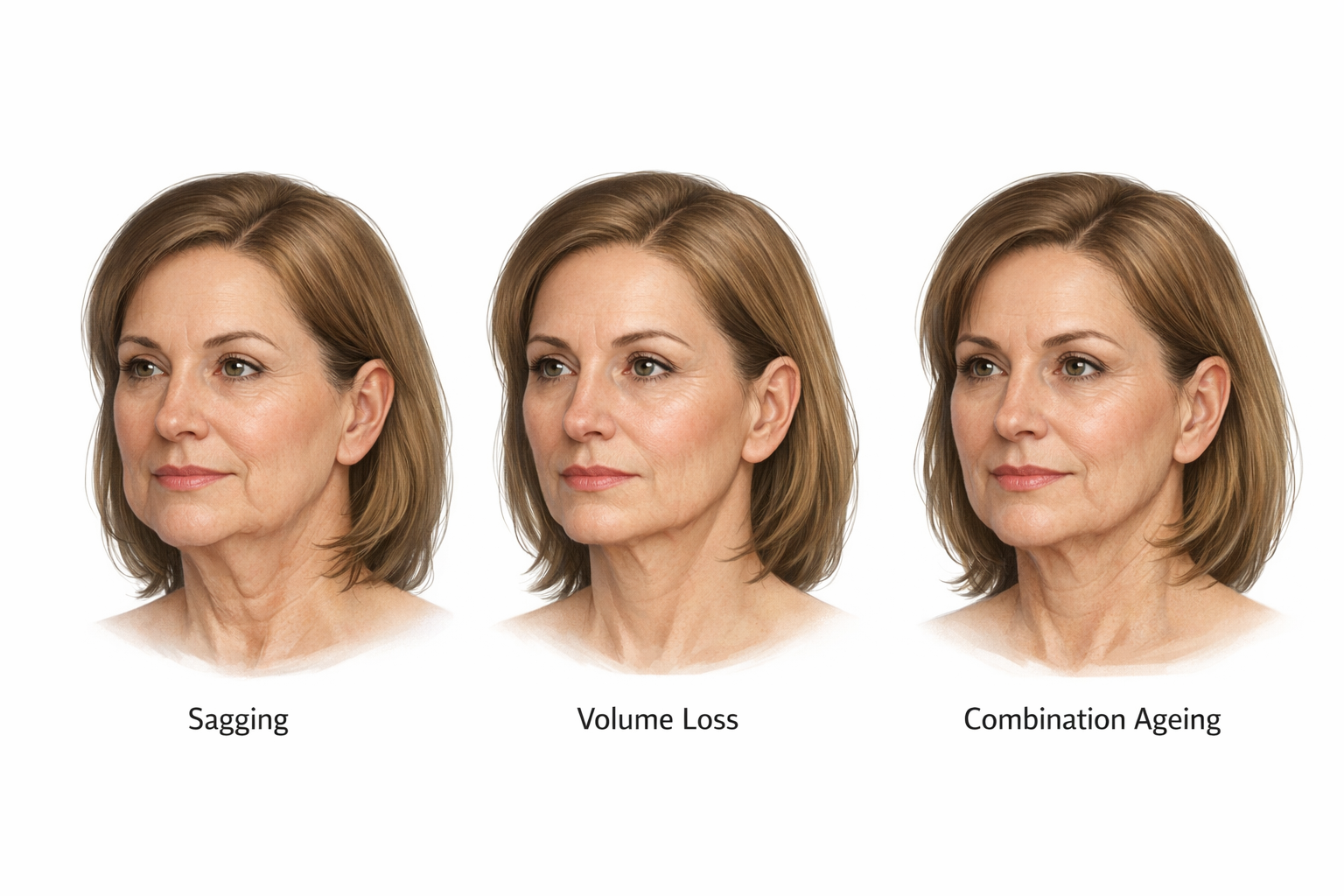
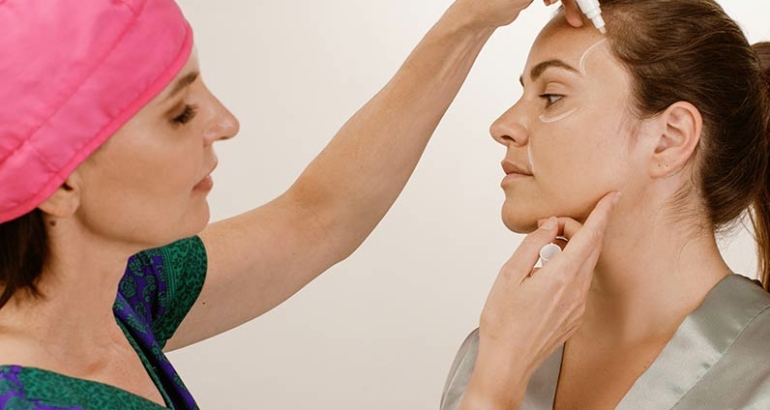
Images created by AI for educational purposes.
What is facial volume loss?
Volume loss is different. It is a deflation problem. With age, certain fat pads shrink, and we also loose some of the bony support that once held soft tissue forward and lifted. This is why a face can begin to look flatter, more hollow, or more tired — especially around the temples, cheeks, and under-eye area as well as the perioral area including the lips .
This is where the right injectables can be extremely helpful. When volume is truly missing, careful restoration can bring back youthful contour and support, without changing the face.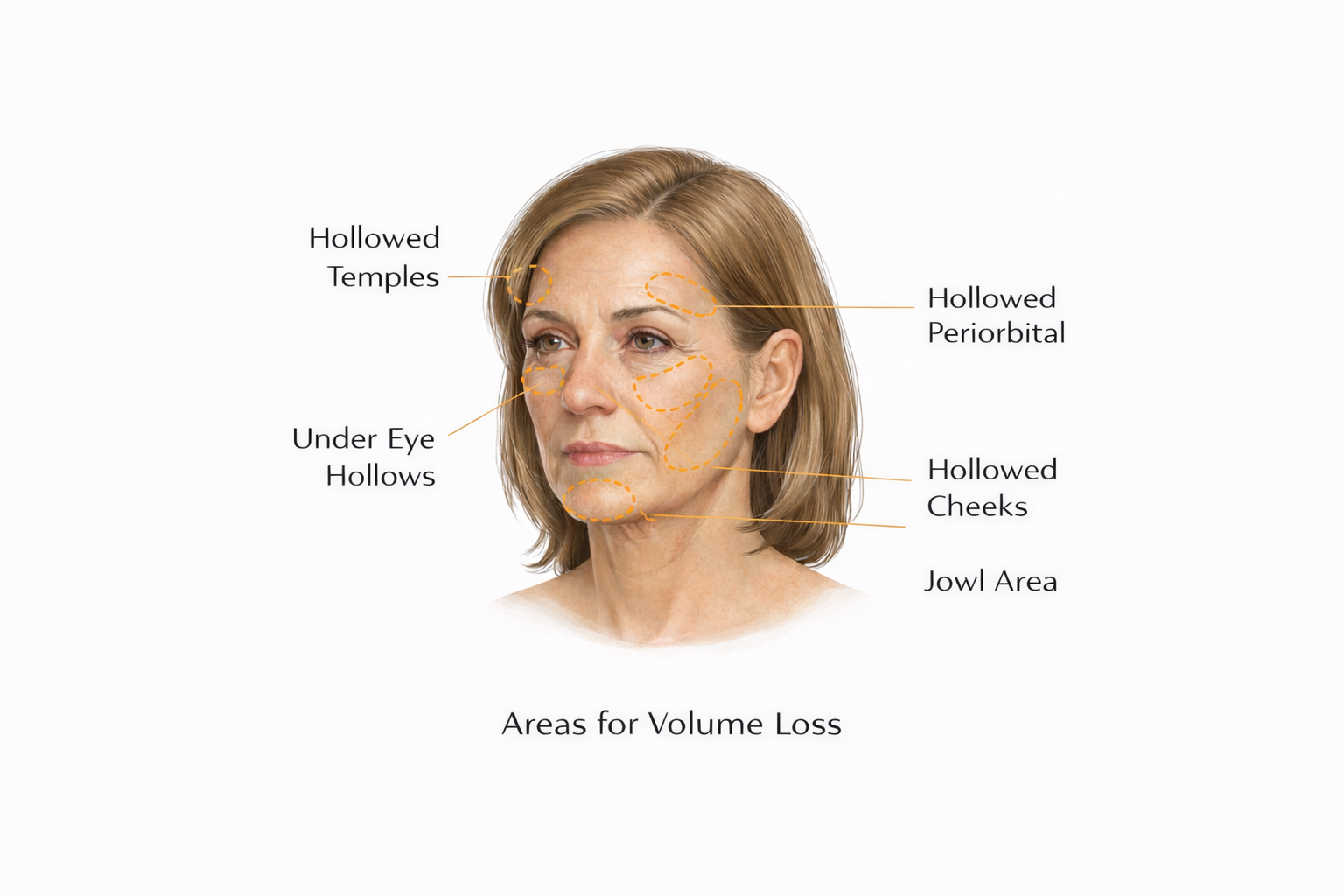
Images created by AI for educational purposes.
How can you tell the difference between sagging and volume loss?
A simple way to think about facial sagging vs volume loss is this: sagging tends to look heavy, while volume loss tends to look tired.
If your main concern is the lower face and neck — jowls, jawline blurring, a “melted” look under the chin — sagging is likely playing a major role. If your main concern is hollowing and flattening — especially in the midface, temples, and under the eyes — volume loss is likely a major driver.
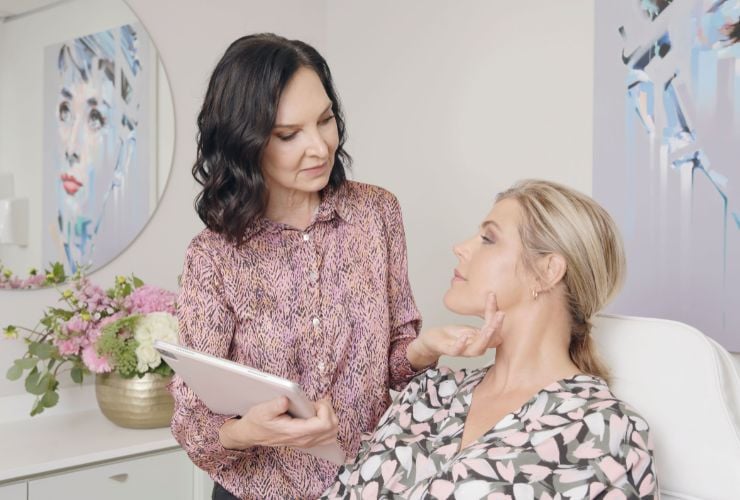
But I will also say this clearly: mirrors can mislead. Lighting and angles can exaggerate hollows or heaviness, and we are often harshest on ourselves at the worst times of day. This is why clinical assessment matters. It allows us to see the face objectively, in neutral lighting, from multiple angles, and in motion — which is how real people see you.
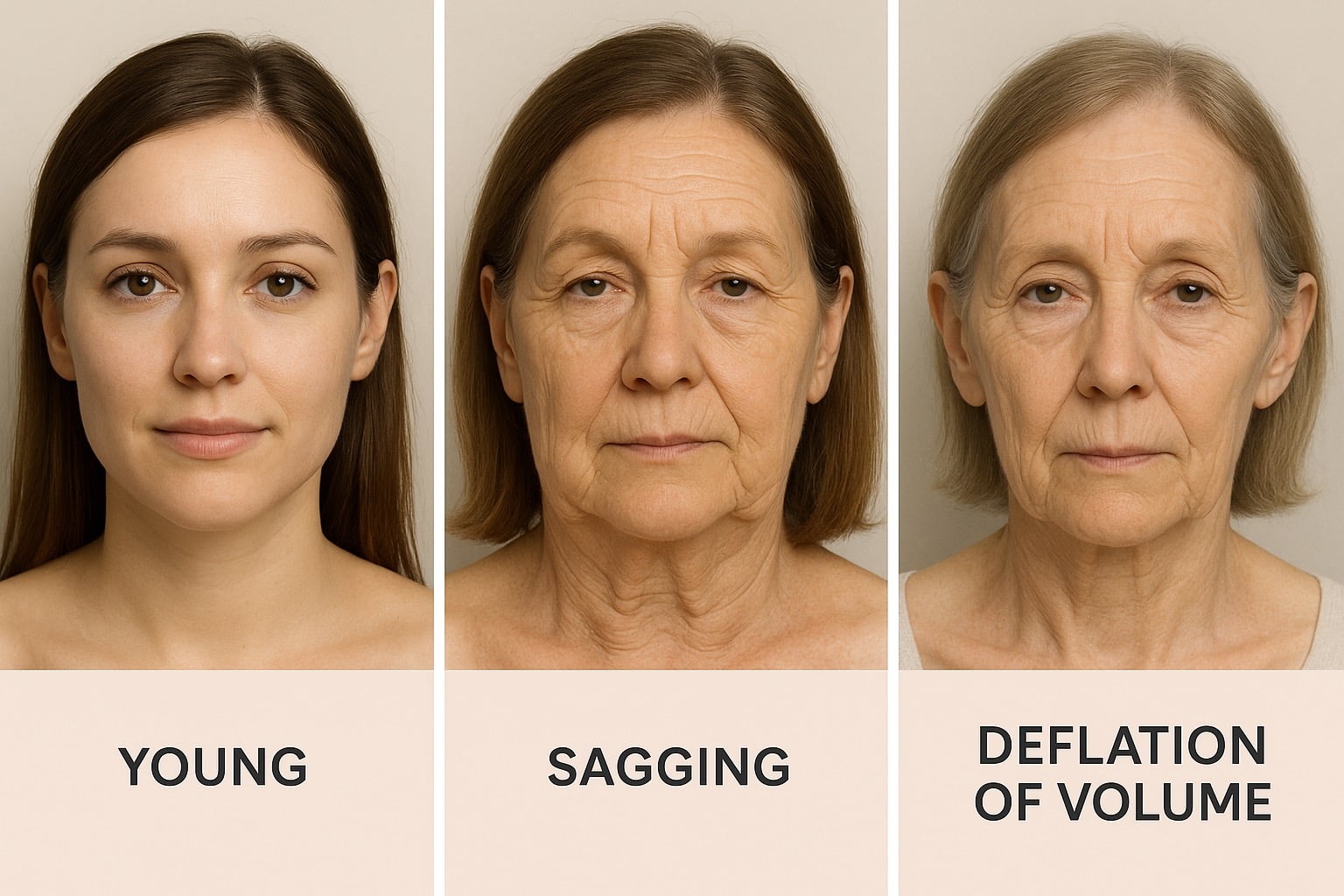
Images created by AI for educational purposes.
Facelift vs fillers: can injectables replace a facelift?
Sometimes they can. Often, they cannot. This is where a balanced, honest conversation is essential.
Injectables can be excellent for early ageing, especially when volume loss is the main driver. They can restore softness, support, and contour, and in many patient,s they delay surgery for years.
But injectables do not truly reposition significantly descended tissue. They can support and camouflage in selected cases, but they cannot recreate what lifting surgery is designed to do: restore architecture and reposition tissue that has dropped. When we try to treat sagging with filler alone, the face can gradually become heavier or wider, rather than more lifted.
So the real answer to facelift vs fillers is that each has a role — but not in the same patient, in the same way, at the same stage of ageing.

The signs you need a facelift
Patients often want a simple checklist, and while no list replaces a proper consultation, certain patterns are very consistent. The most common signs you need a facelift are persistent jowls, progressive jawline blurring, and neck laxity that does not respond well to non-surgical treatments. Another sign is when you find yourself doing more and more injectables but feeling less and less satisfied — not because the injector is “bad,” but because the anatomy has shifted into a stage where repositioning, not filling, is what’s required.
When the primary issue is structural descent, facelift surgery is often the most natural, proportion-preserving solution because it restores the face to where it used to sit — rather than trying to compensate by adding volume.

Why combining treatments often gives the most natural outcome
The most beautiful results are rarely achieved with one tool alone. In my practice, I often combine approaches because surgery and non-surgical treatments do different jobs.
Lifting procedures address position. Regenerative treatments and volume restoration address softness, support, and skin quality. Skin treatments and energy-based devices refine texture and tighten where appropriate. This integrative philosophy is why we offer both surgical and regenerative approaches at Dr Nerina Wilkinson + Associates — including signature procedures such as the StemCell4DLift™ and BELLA Lift, as well as bespoke combinations tailored to your face rather than to a trend.
Diagnosis matters more than the procedure
If there is one principle I want you to remember, it is this: the procedure is only as good as the diagnosis behind it.
Two patients can describe the same complaint — “I look older” — but require completely different solutions. The goal is never to chase a treatment; it is to understand why you look the way you do, then choose the most appropriate path to restore balance.
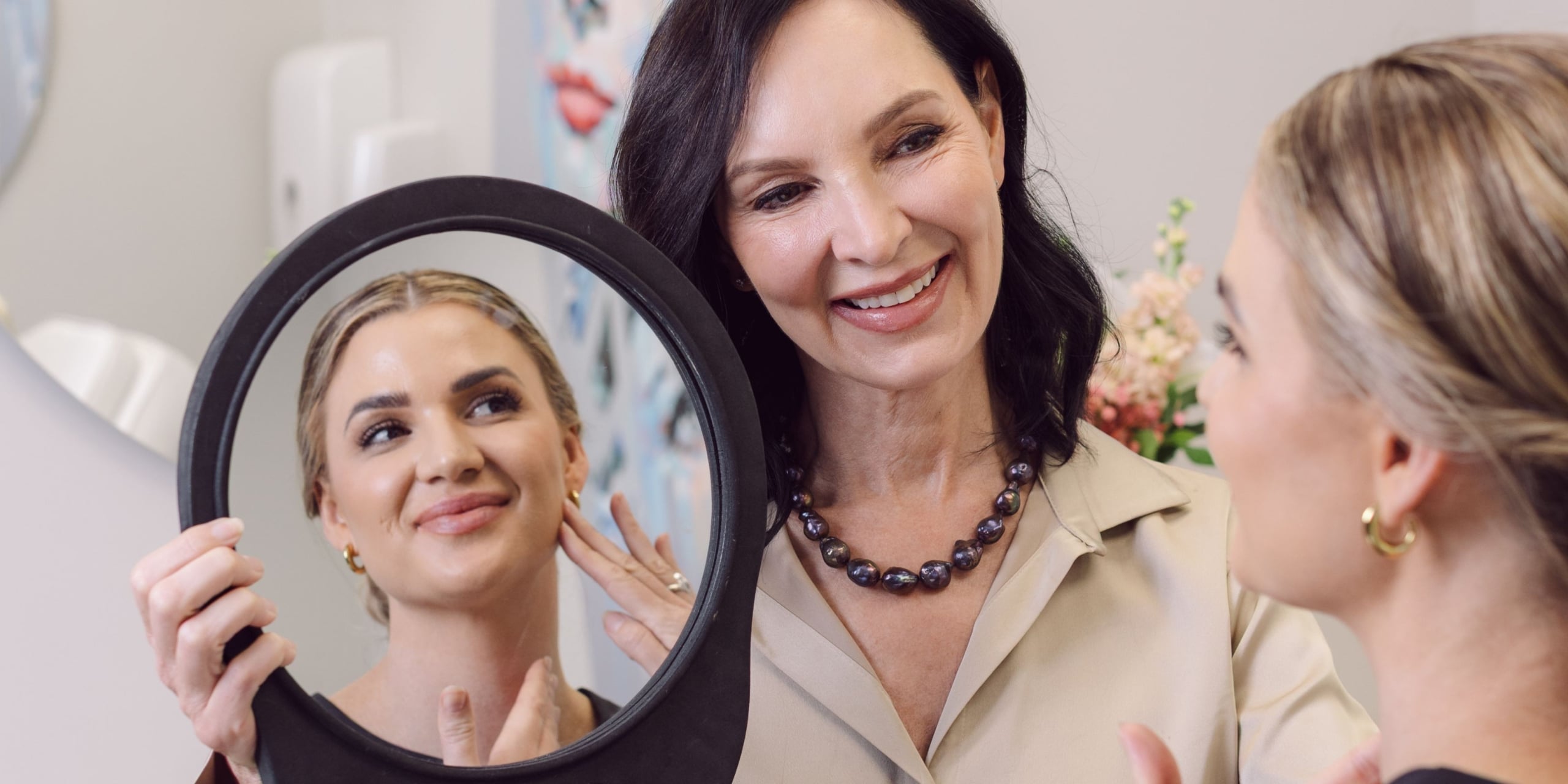
Not sure what your face needs?
If you are unsure whether you are seeing sagging, volume loss, or both, the best place to start is not a procedure — it is an assessment.
At Dr Nerina Wilkinson + Associates, we take a structured, evidence-based approach to facial rejuvenation, always prioritising safety, proportion, and long-term skin health. If you would like clarity on what your face truly needs — whether that is injectables, regenerative treatments, facelift surgery, or a combination — contact us about a consultation and let’s plan properly.
By Dr. Nerina Wilkinson
Cosmetic Surgeon | MBChB (Stell) M.MedFC PLAST (SA)